


Pulse the Magazine of Texas Tech University Health Sciences Center Winter 2026



Features
By Tina Hay

By Bob Dent, DNP, MBA, RN, (Nursing ‘10)
In Every Issue
Photo by Ron Jenkins.
Departments

Health Matters A Letter from Our President
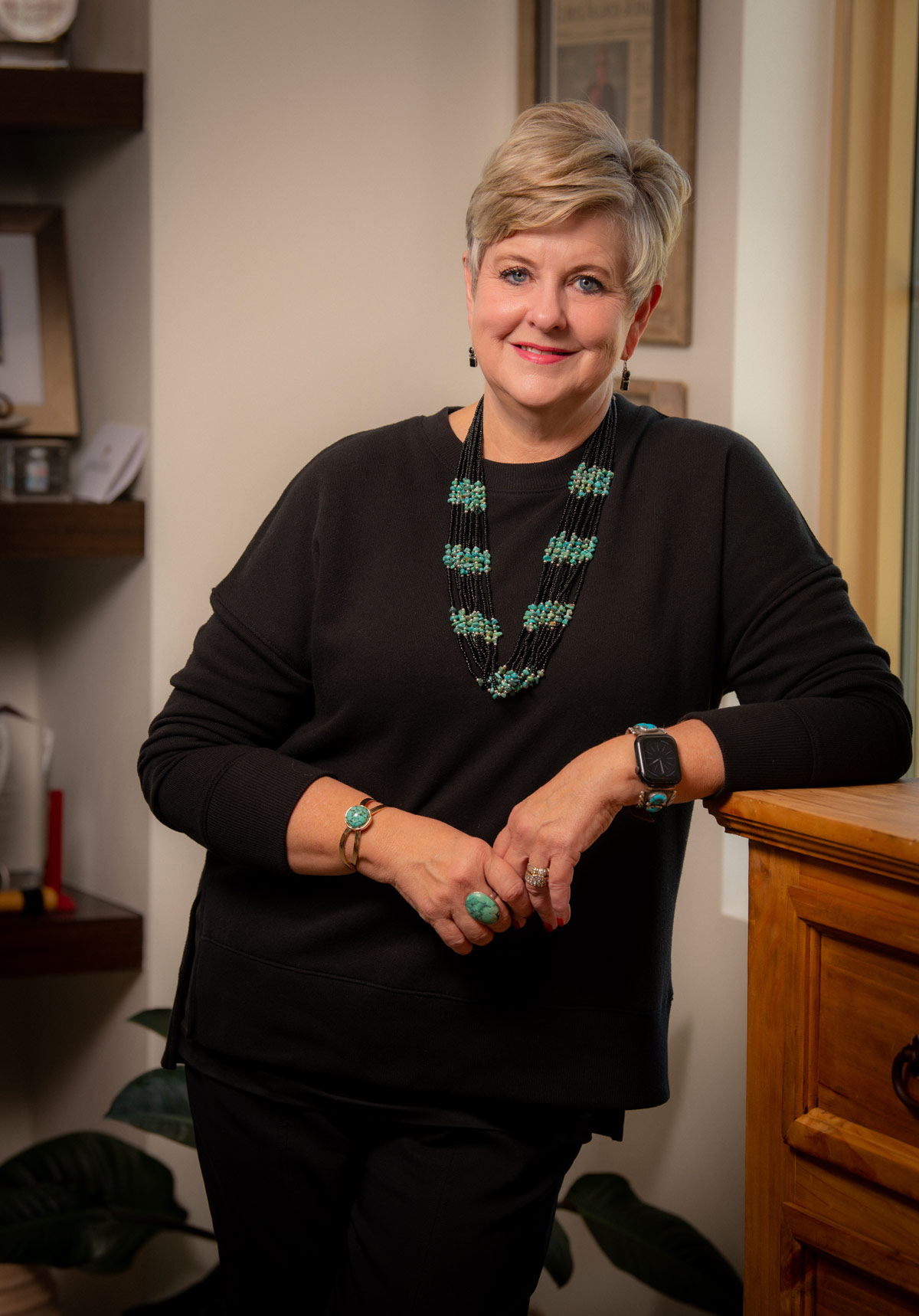
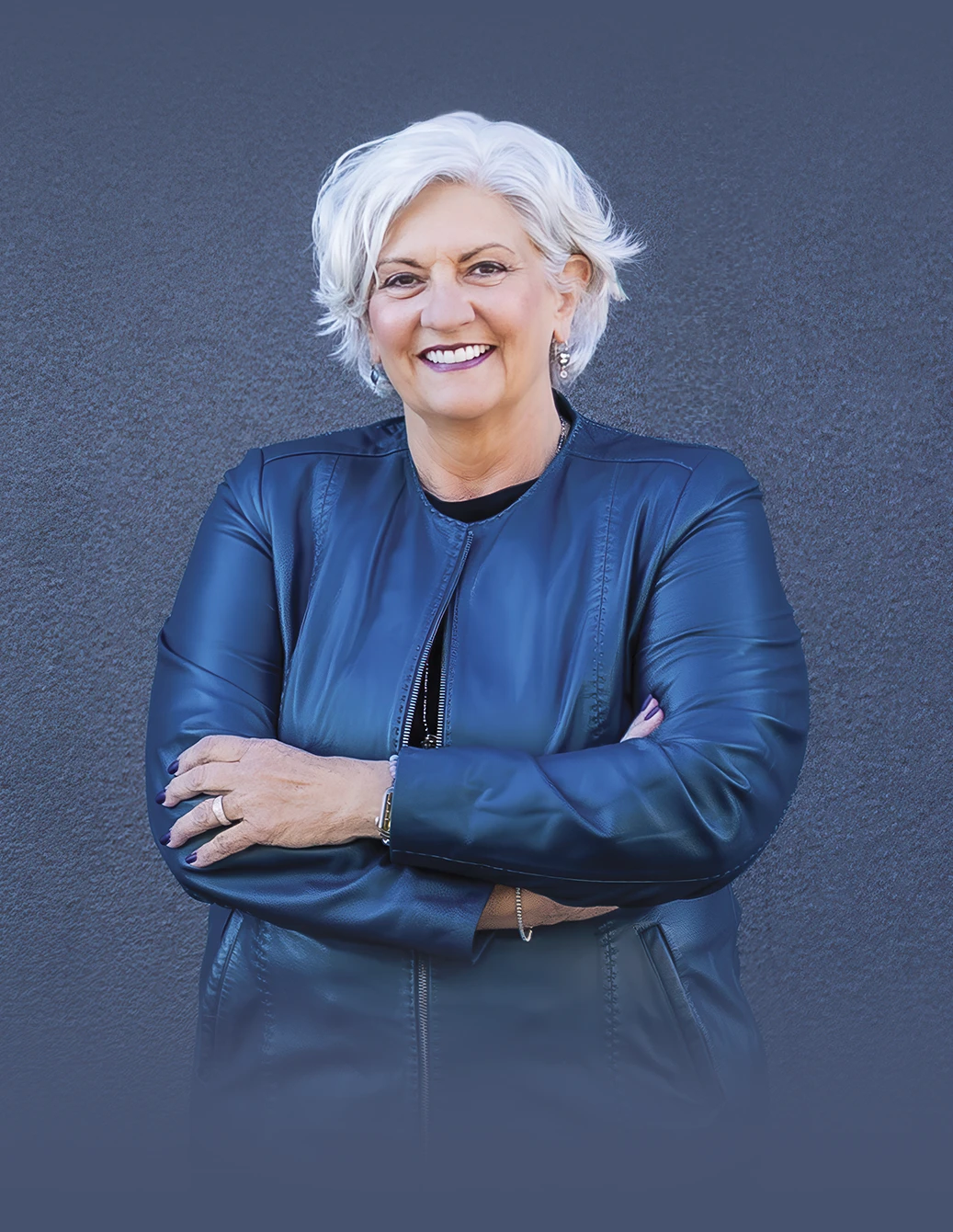
Each Investment in Care Shapes a Healthier Texas
As we extend our reach across this great state, we remain firmly rooted in the purpose that has defined us from the start. Quality health care forms the foundation of a strong community. It supports families, attracts employers and gives people confidence that their hometown is a place where they can thrive.
At TTUHSC, we are building the health care workforce Texas needs. About one in four health professionals serving our great state are TTUHSC graduates. Even before graduation, our students are working to strengthen access to care in communities across the western half of Texas through their clinical rotations. We’re continuously developing innovative ways to deliver care, such as our recent collaboration with Texas A&M Health in Fort Davis, which brought primary and mental health services to a region with only one doctor serving 2,000 residents.
Editor’s Note
Consider that, nationwide, nearly one in four adults experiences a mental health concern each year, and that includes health care professionals. These numbers remind us that health care systems must be concerned not only about the patients they care for but also the caregivers. Wellness is not a luxury; it’s the foundation for every act of compassion, discovery and service in health care.
The stories in this issue capture what that looks like in real life. As you read them, I hope you’ll pause to think about your own well-being. When we make space to care for ourselves and for one another, we move closer to a healthier future for us all.
story feedback
We Asked, You Answered
Clarification
Masthead

Editor-in-chief
Danette Baker, MA
Managing Editor
Michael A. Cantu
Design
Jim Nissen
Contributors
Kristen Barton; Meredith Byrne; TR Castillo; Liz Christy; Bob Dent, DNP, MBA, RN; Whitney Green; Tina Hay; Mark Hendricks; Neal Hinkle; Kami Hunt; Ron Jenkins; Holly Leger; Anakin Rayos; Rapp Art: Zara Pickens, Eva Vazquez, Chiara Verseci, Nicole Xu, Kotrina Zukauskaite; Kevin Urenda
Administration
President
Lori Rice-Spearman, PhD
(Health Professions ‘86)
Executive Chief of staff, Executive Vice President of External Relations
Ashley Hamm
Vice President of COMMUNICATIONS AND MARKETING
Holly Russell
Vice President of institutional advancement, chief development officer
Britt Pharris
Assistant Vice President of External Relations
DaLana Williamson
Mattie Been, Amarillo
Cyndy Morris, Abilene / Dallas
Jessica Zuniga, Permian Basin
Assistant Vice President ofINSTITUTIONAL ADVANCEMENT
Alicia Broughton, Lubbock
assistant vice President of institutional advancement operations
Marcie Aultman
pulse@ttuhsc.edu
3601 Fourth Street STOP 6242
Lubbock, TX 79430-6242


Dementia Care Partners
Project ECHO will also partner with the TTUHSC Garrison Institute on Aging to provide resources necessary to treat patients and teach area health care providers.
“We have a lot of great primary care physicians but they are not trained to treat dementia or Alzheimer’s,” says Ariel Santos, MD, Department of Surgery chair and director of the School of Medicine telemedicine program.
 AROUND THE UNIVERSITY
Plug and Play
TTUHSC’s TexLa Telehealth Resource Center was awarded a $1.3 million grant by the Health Resources and Services Administration. The funding, which lasts through 2029, will help support Frontiers in Telemedicine (FIT) education and training. FIT, offered through TTUHSC, helps train medical professionals in telehealth procedures, technology and business.
The new grant aims to enhance the education of medical practitioners in the field who lack extensive telehealth training.
“We have to educate not just MDs, but also nurses, physical therapists and speech-language pathologists to make sure they have the knowledge to be successful in providing telemedicine,” says Ariel Santos, MD, Department of Surgery chair and principal investigator for TexLa, which leads projects in Texas and Louisiana through the National Consortium of Telehealth Resource Centers.
FIT lab instructors now have the resources to provide technical assistance to other universities, private institutions and providers. Education will go beyond patient monitoring and teach providers about the benefits of artificial intelligence and how to use wearable devices to track a patient’s health metrics.
“Things are changing, so I think the delivery of education should be changing as well,” Santos says.
Education for Service
Maxson recalls helping a learner who withdrew from courses due to financial hardship while their spouse was deployed. Her team worked with faculty and staff to resolve the issue and helped the learner return the following semester. “I’m glad we could help,” Maxson says. “I don’t know if she could have continued otherwise.”
Such efforts contributed to TTUHSC’s 2025 Gold Award for Veteran Education Excellence, an honor recognizing colleges that advance the academic success of veterans and military-connected learners. “It’s more than a recognition,” Maxson says. “It reflects years of building a culture that honors and supports military service.”
 Faculty Profile
Aric Logsdon, PhD
A: In high school, I had the privilege of meeting a college mentor (Jeffrey Cross, PhD) who realized my interest in this research and thought I should go to Allegheny College in Meadville, Pennsylvania, and major in neuroscience. I hit the ground running and performed my own independent neuroscience research at such a young age. Ever since I was 16 — now over 20 years of my life — I have had an interest in conducting neuroscience research to better understand the onset and progression of various neurological diseases.
Q: What are the unique sources of your research inspiration?
A: Early on, I was inspired to understand how an animal’s physiology impacts their daily lives. I now think about other evolutionary developments and how we can better understand how the brain functions. For instance, if we’re modeling research for a brain injury, we should use animals with brains structurally similar to humans. If you look at a human brain and a pig brain, they both have undulations, or concave surfaces. If you look at a mouse brain, it’s smooth. So actually, causing injury to the smooth brain may not be the optimal approach in helping translate therapeutic options effectively.
for the recordStat! By the Numbers

Early Detection and Prevention: Increase breast and cervical cancer screenings to enable earlier diagnoses and more treatment options.
Integrated treatment and care: Upgrade labs, diagnostic tools and surgical technologies, and expand clinical staffing to deliver advanced cancer care.
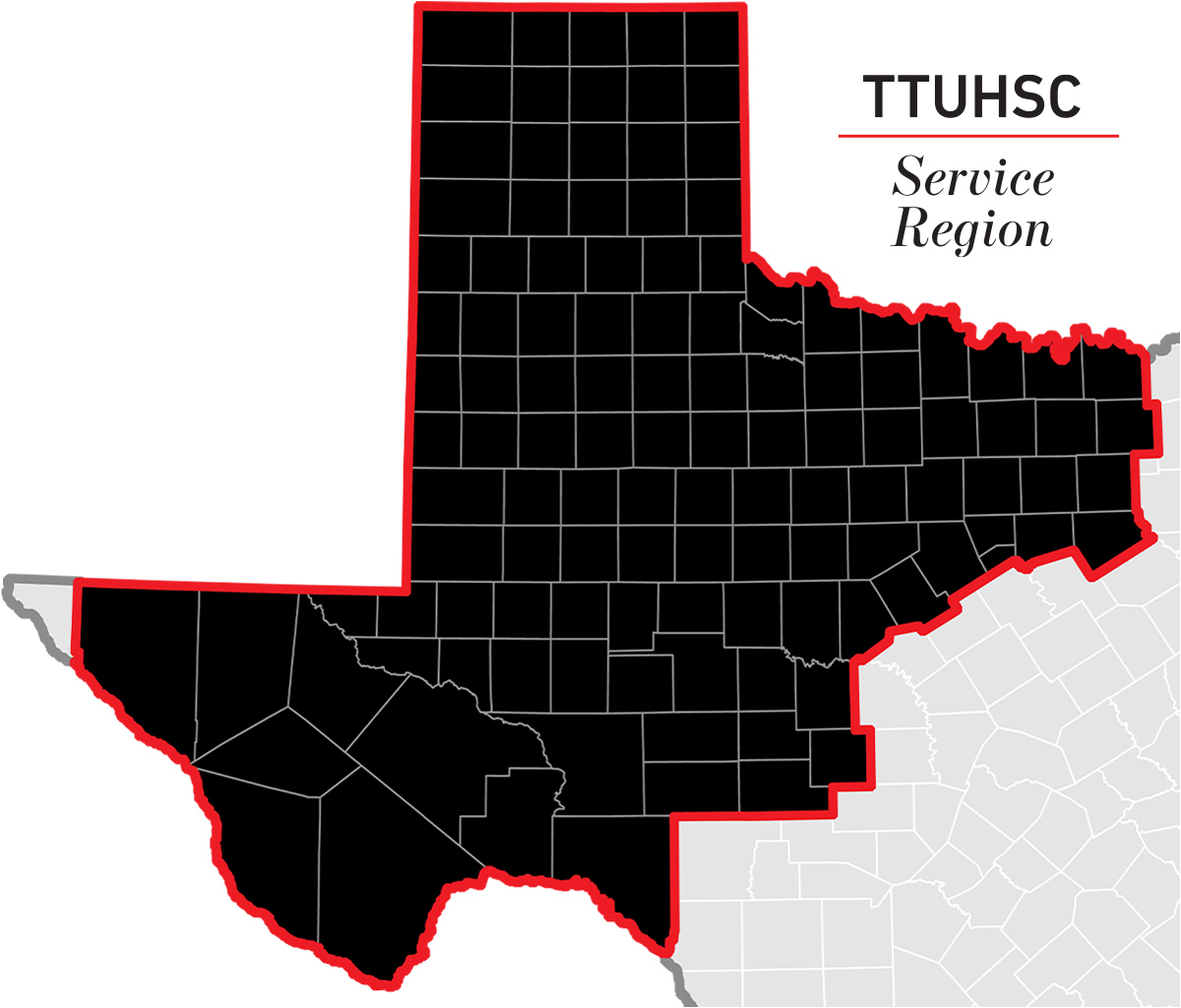
With the
million in state funding, TTUHSC Is Investing In early detection, integrated treatment and care, and research and data analytics across the
counties west of I-35.

Vitals: Signs from the Schools
Training to Train
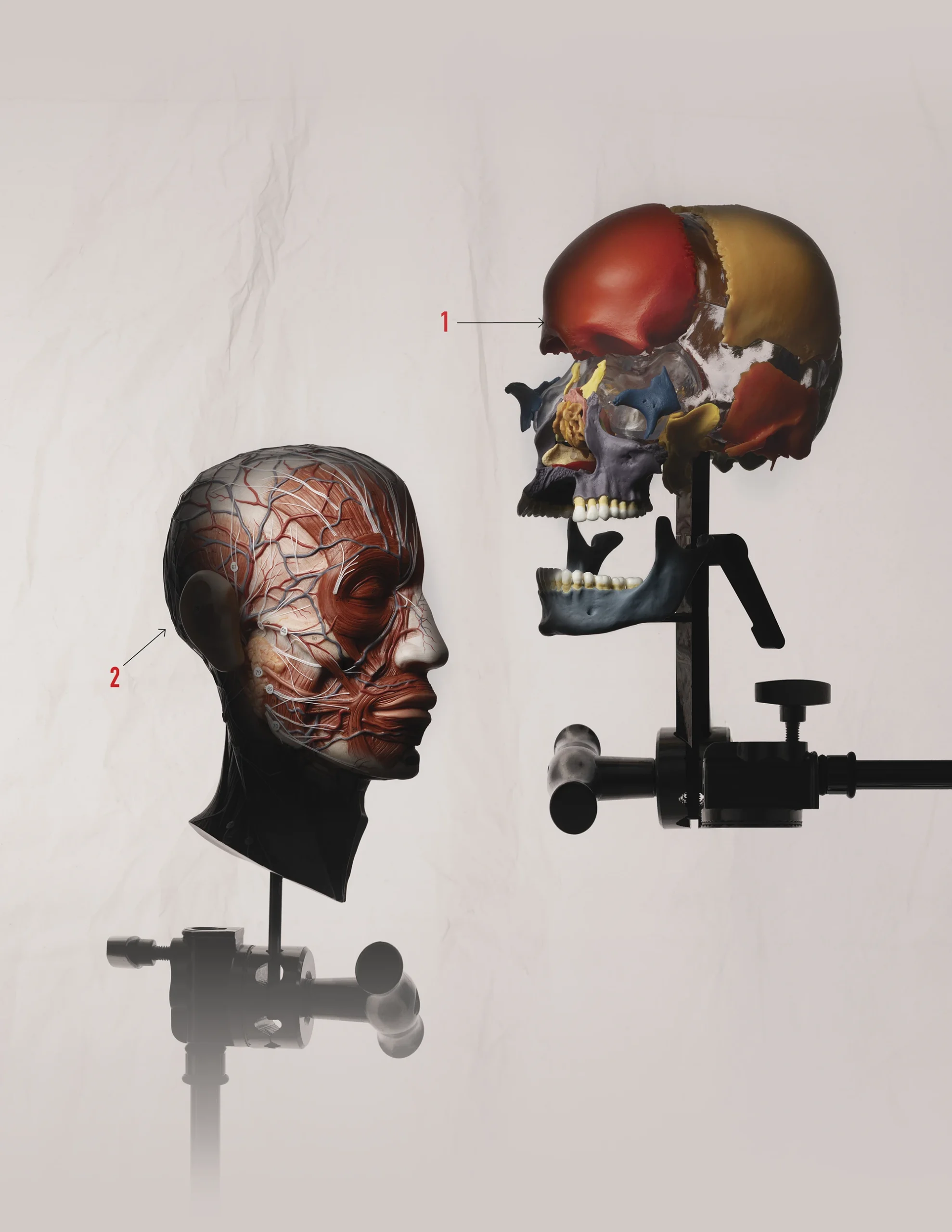
1
Anatomic models can be used as a tool to teach about parts of the human skull.
2
Numbers associated with anatomical structures indicate specific head muscles.
Graduate School of Biomedical SciencesContaining Cancer
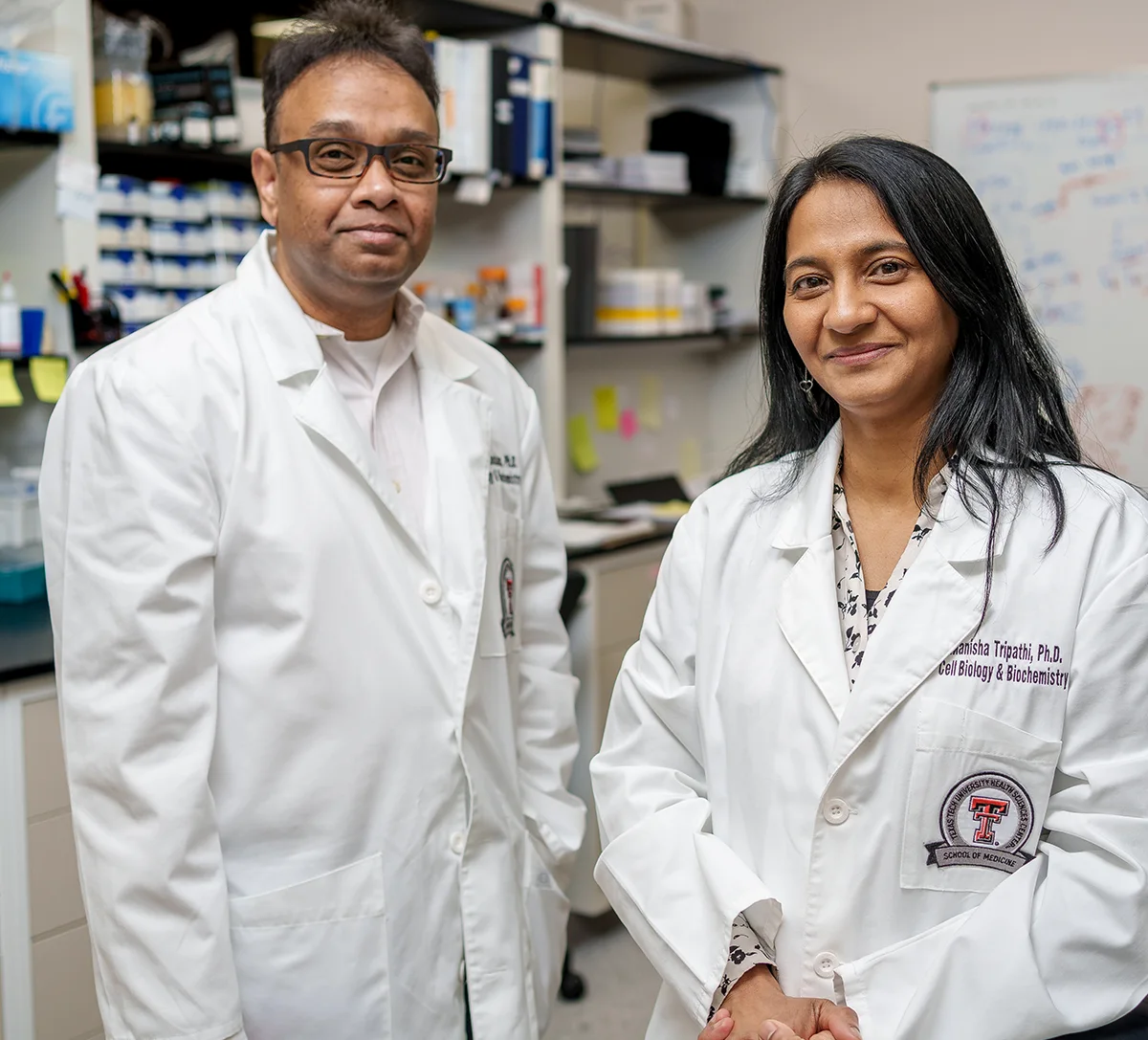
Srinivas Nandana, PhD, and Manisha Tripathi, PhD, assistant professors in the School of Medicine Department of Cell Biology and Biochemistry, investigate TBX2 — a protein that turns genes off and on. When TBX2 is active in prostate cancer cells, it sends signals for bones to host those cancer cells.
Their research focuses on exosomes — molecular membrane structures released into the bloodstream by the prostate tumor. When exosomes reach the bone, they reprogram bone cells to a cancer-thriving environment. Both believe that TBX2-NOTCH — a molecular pathway — plays a role in the process and could be targeted to prevent cancer from spreading to the bones.
How’s School Going?
1 | Find Support
“One thing I wish I had known before applying to grad school is how important it is to build a support system early on. Whether it’s friends in your program, a good relationship with your principal investigator (PI)/mentor or just people outside of academia you can talk to, having people to lean on makes a huge difference.”
“One tip I have for impostor syndrome is to be aware that grad school is for learning, so it’s OK if you don’t know everything or if it’s your first time learning about a concept or a lab technique that your peers already have experience with.”
“My tip for lab rotations is to not be afraid to directly ask the PI if they can afford a student — as you can like a lab, but if the PI can’t fund you, then that part doesn’t matter. Also, it’s OK if you don’t have a lab decided by the end of fall. I didn’t find my lab until the spring.”
VitalsJulia jones matthews school of population and public health
What’s the Story Here?
Because of this, he is putting together preliminary data that could soon set in motion further research to provide more context on the types of cancer in select West Texas areas and their prevalence in certain communities.
“I like to think of it as a jumping off point – just step one or two in the process that gets a good handle on what the actual yearly numbers of new cases of cancer are in a given year,” Dennis, assistant dean for Student Affairs in the Julia Jones Matthews School of Population and Public Health, Lubbock, says.
 School of Medicine
When Football Gives You Lemons

A Different Perspective
Stop.
Process.
“Sometimes it might be a wedding coming up, they don’t want to do chemo then or they don’t want to have the nausea,” Cheedella adds.
Act.
School of MedicineWhen Retirement Feels Right
“I would say I’m busier now than I was in the very beginning,” he says.
Griswold has worked as a burn surgeon for TTUHSC Lubbock since 1992. It was the influence of other nationally known trauma surgeons Peter Canizaro, MD, and Timothy J. Harnar, MD, that led him into the field. Griswold was interested in conquering “the hardest thing there is to do.”
Since then, he has added chair, research and director positions to his responsibilities while still seeing patients. In 2016, UMC Health System named its trauma center after him – something Griswold still humbly describes as shocking, but he’s grateful. In 2025, he received the American Burn Association Lifetime Achievement Award (the 13th recipient since the organization’s founding).
It may take a while to find new adventures. Perhaps after a few minutes in the kitchen with a cup of coffee, he’ll figure things out.
“Whatever I’m supposed to do for retirement won’t come to me until after that,” he jokes.
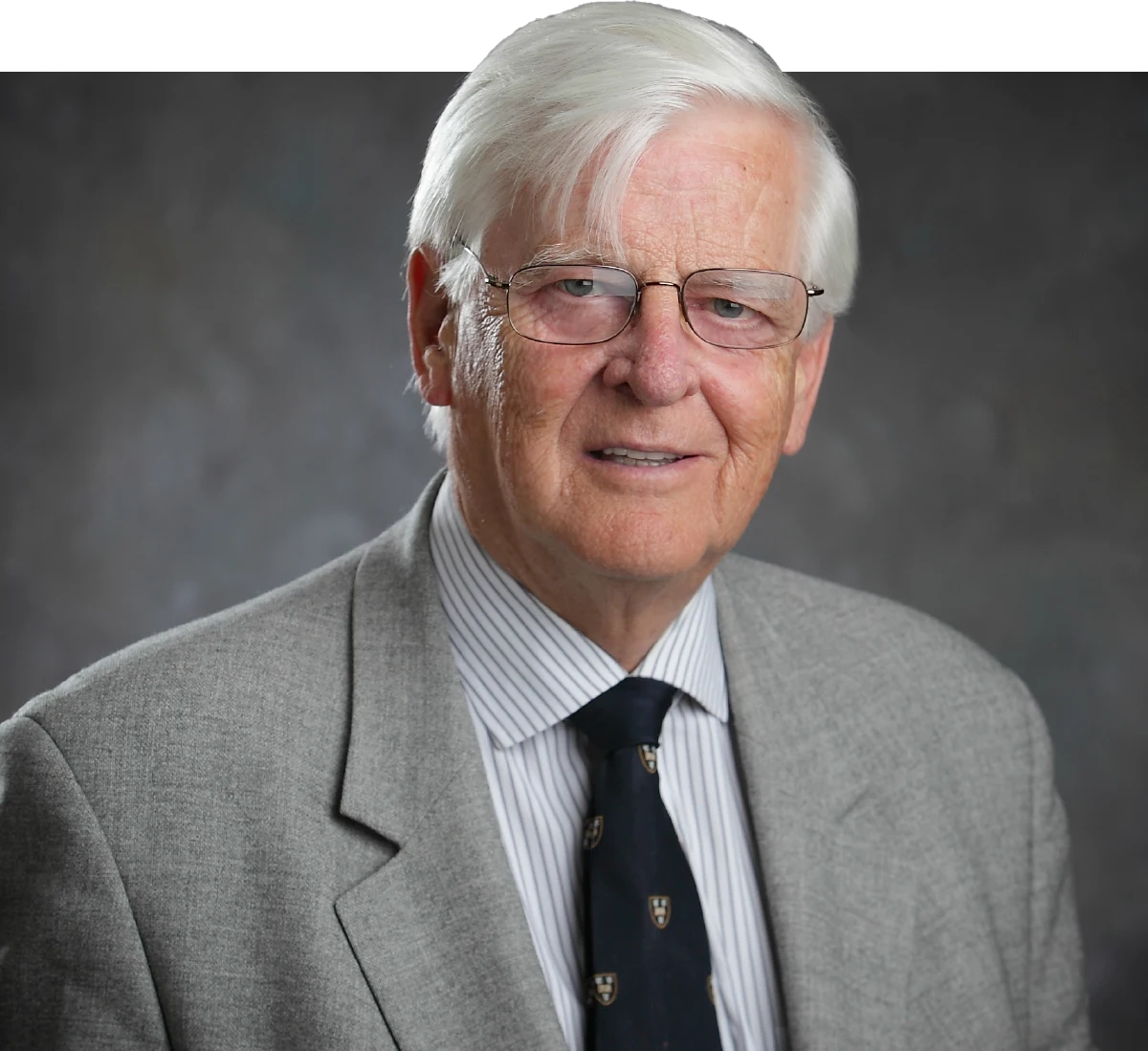
In Memoriam: Gabor Racz
VitalsSchool of health professions
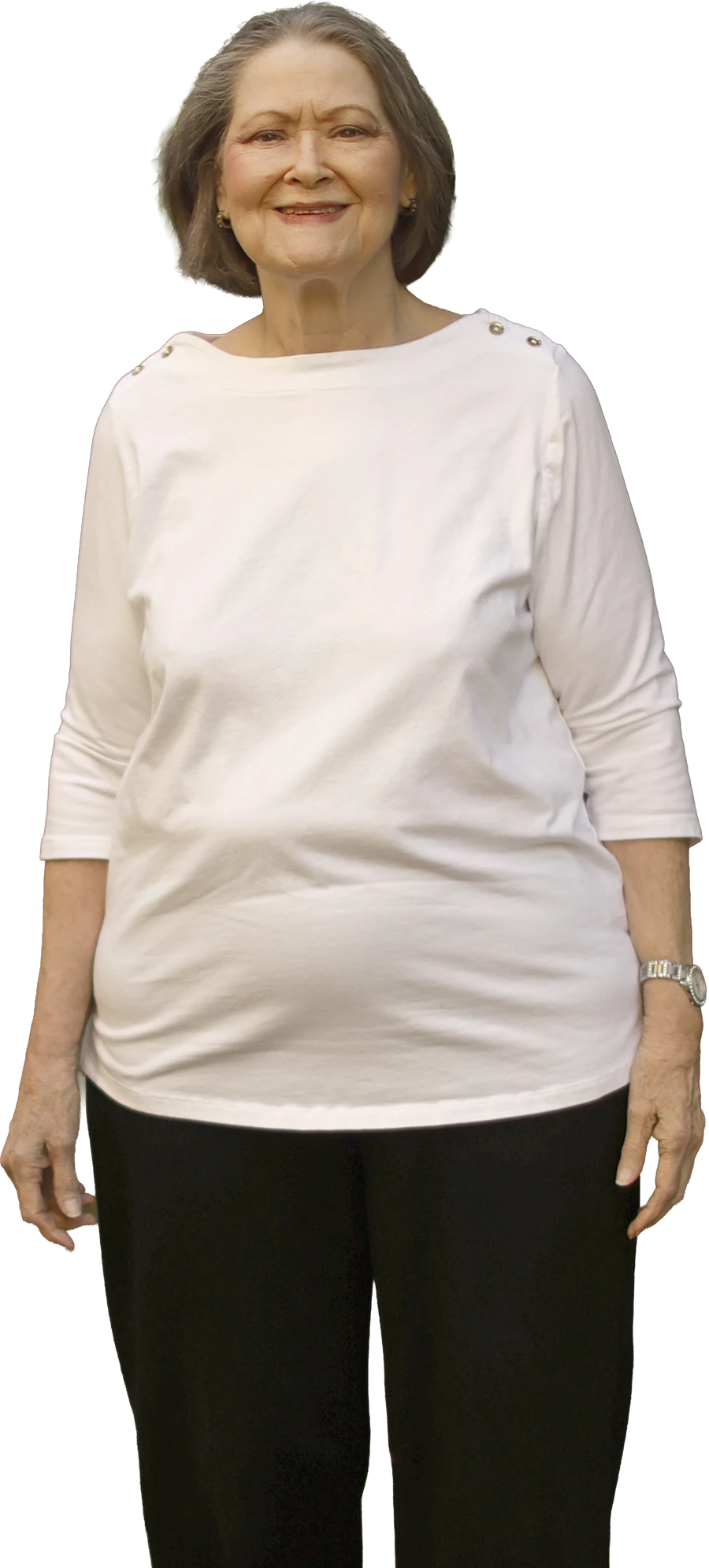
I Can Help, So Can You
Instead, she earned home economics degrees from the University of Texas in the late ’70s and then a master’s from Texas Tech University in 1981. In the late ’80s, Teasdale decided to return to school and become a medical technologist, figuring she would be helpful at any nearby hospital.
She was in her 30s then, surrounded by younger learners. This time around, though, there was more commitment to her graduation goal, free of any distractions. And, since she was on the hook for her own tuition bill, Teasdale was hyper-focused on her investment.
Now in retirement, she wants to ensure costs do not deter future TTUHSC learners, which has motivated her to give to numerous scholarships and other philanthropic efforts.


 School of health professions
No, not that kind of rehab
Who Gets Help
She uses an athletic injury as an example of what needs to be thought through. “(We help them figure out) ‘How do I continue to be an athlete despite this injury?’ or ‘How do I shift careers if that’s no longer feasible?’” she adds.
Degree requirements include a telehealth certification to provide rural patients with more treatment options.
How Students Learn
Who Gets It
“(Outside of) the ability of (learners) reading a textbook and passing a quiz is whether they have the soft skills to relate to a client?” she says. “Because you have other spaces in the world where you’re not going to be met with empathy, so it’s important we foster that for our clients.”

Is This What I Need?
The physician, associate professor and director of the School of Medicine Internal Medicine Residency Program at TTUHSC Lubbock notices patients are also now asking about GLP-1 drugs — those typically used for diabetes regulation and weight loss — since they have entered the public consciousness in recent years. “I guess it was all uphill or downhill from there,” he jokes.
Though buzz continually swirls around these medications, and it’s a topic of casual conversations, Payne sees the increase in the drug’s popularity as a medical breakthrough — though precautions are needed.
A simple Google search can open pathways to a prescription with virtually no barriers: no in-person visits or $45 plans through programs like Medicaid.
“I don’t see GLP-1’s going away,” he adds.
Access to the drugs can sometimes be easy, but that does not always mean they will work for everyone. He urges his own patients and the public to bring questions to their physician before going their own way with the medications. The medications can be helpful for weight loss, he warns, but only if taken correctly.
“That foundation is really built on good nutrition and exercise, so even if you read the FDA recommendations, they say in addition to ‘dietary changes and exercise,’” Payne says.
Adding more medications on top of others can have opposite effects too, he says. That is why he recommends talking with a trusted health care professional before introducing anything new.
“Sometimes unpacking all that takes a relationship, time with your provider,” he says. “That’s the major step that most people should take. Find a good doctor that you trust.”
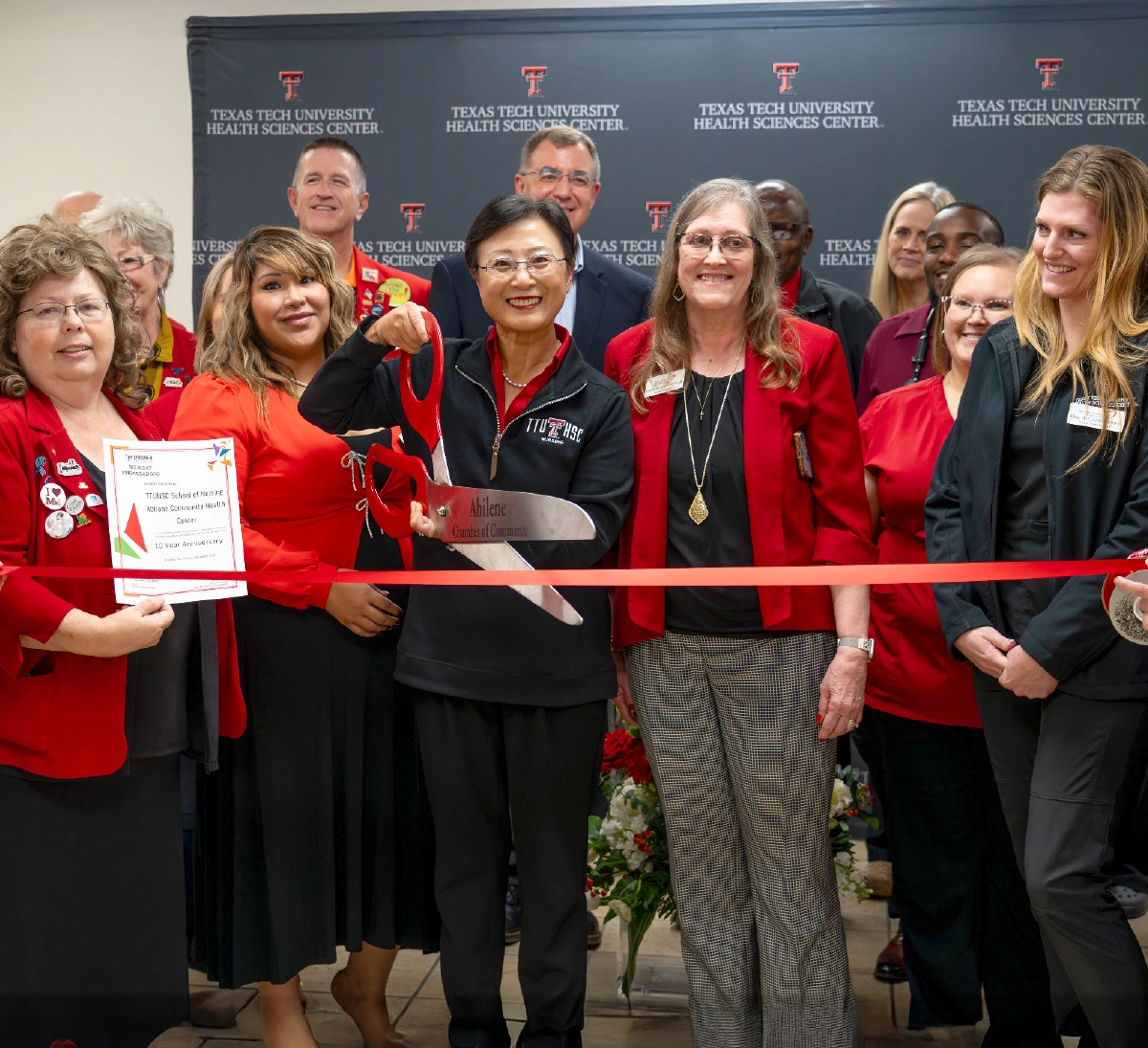
School of NursingCelebrating 10 Years
It all began with one primary care provider but now includes three full-time providers, along with behavioral health services, prescription assistance, immunizations, care management, physical exams and minor injury care. Transportation services, added in 2022, further reduced barriers for underserved patients. The center also integrates student clinical experiences to strengthen future health care delivery in the region.
“This clinic has stood as a trusted source of care and compassion,” says Holly Wei, PhD, RN, School of Nursing dean.
Lone Star Recognition
RegisteredNursing.org recognized the School of Nursing as the
school of nursingSpecial Delivery, Close to Home

In Lubbock, she worked as a nurse midwife and had just started her home birth practice in Amarillo. Although she could not take the client herself, she offered her home for the birth and served as a liaison to find an Amarillo-area midwife who could care for the client.
The situation made her realize she has the potential to serve the people around her. “I told my husband, ‘This needs to be an option,’” Esparza says.
In 2017, Esparza created a facility with a home-like environment close to Amarillo’s hospital district, giving women another option for birth. Today, she serves about 60 clients a year, providing care for pregnant women during their prenatal period to after their child’s birth.
Jerry H. Hodge School of Pharmacy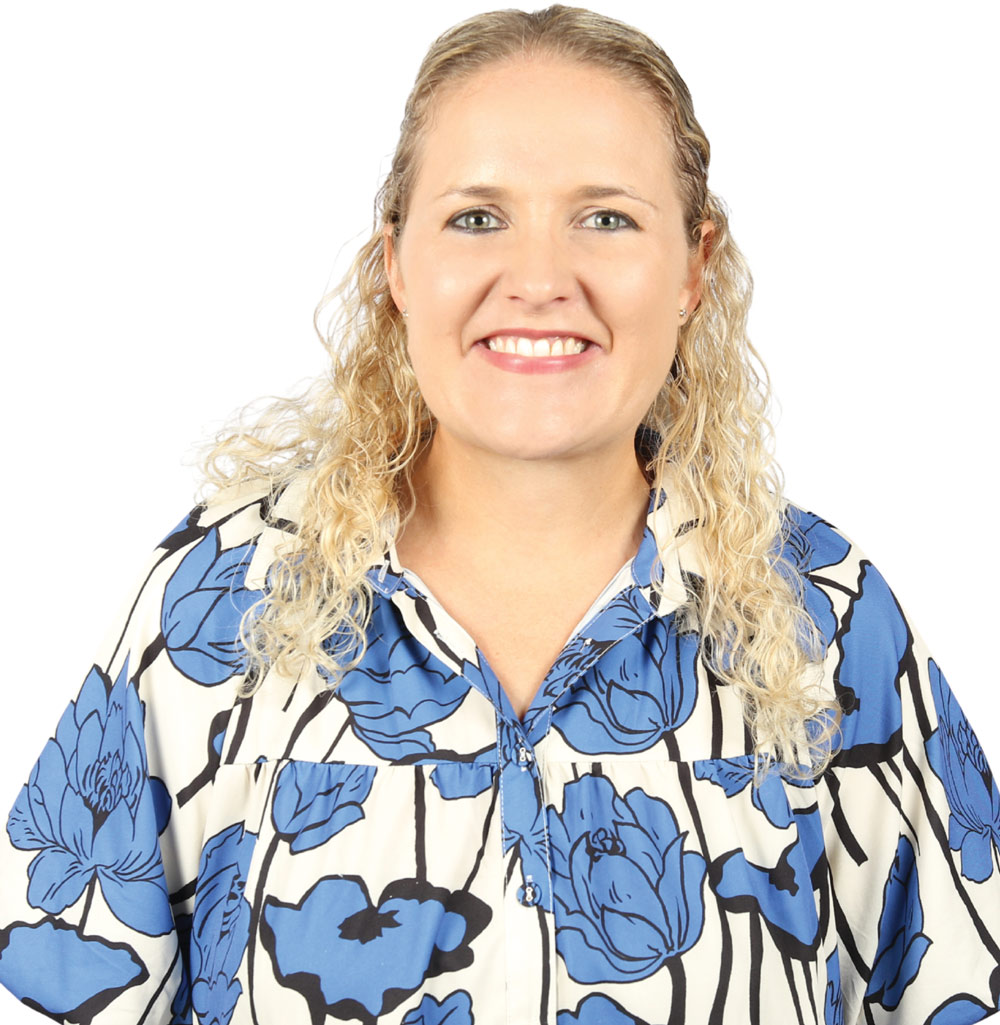
And the Awards Go To …
Prescription for Service team
My Summer Vacation
Second-year learners, Jocelyn Ferguson and Sara Nguyen, were accepted in the Albertson’s Summer Internship program. The two supported immunization and diabetes care at Albertson’s central pharmacy in Irving, Texas.
Building Relationships
Vitalsjerry h. hodge school of pharmacy
Back to Life
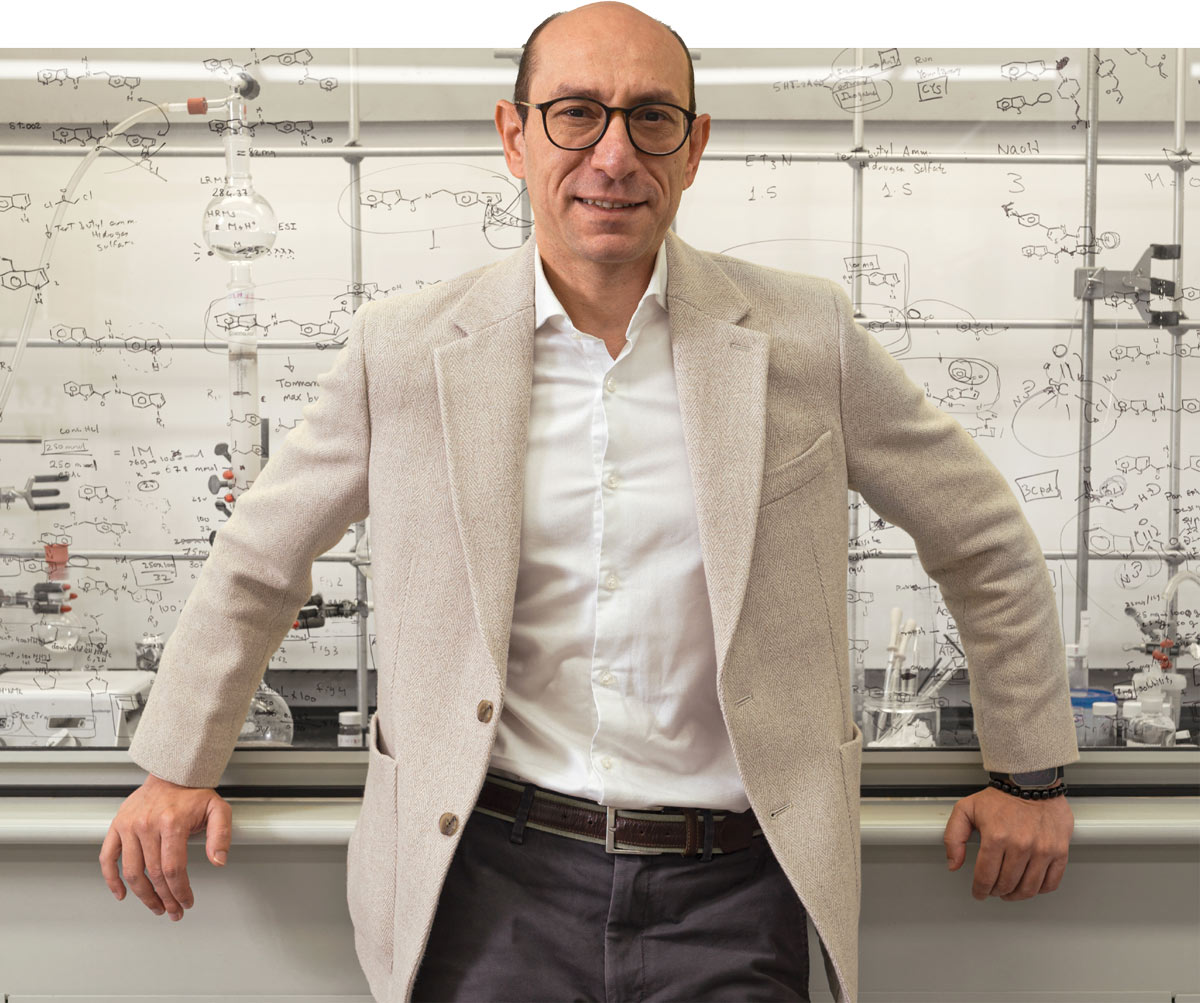
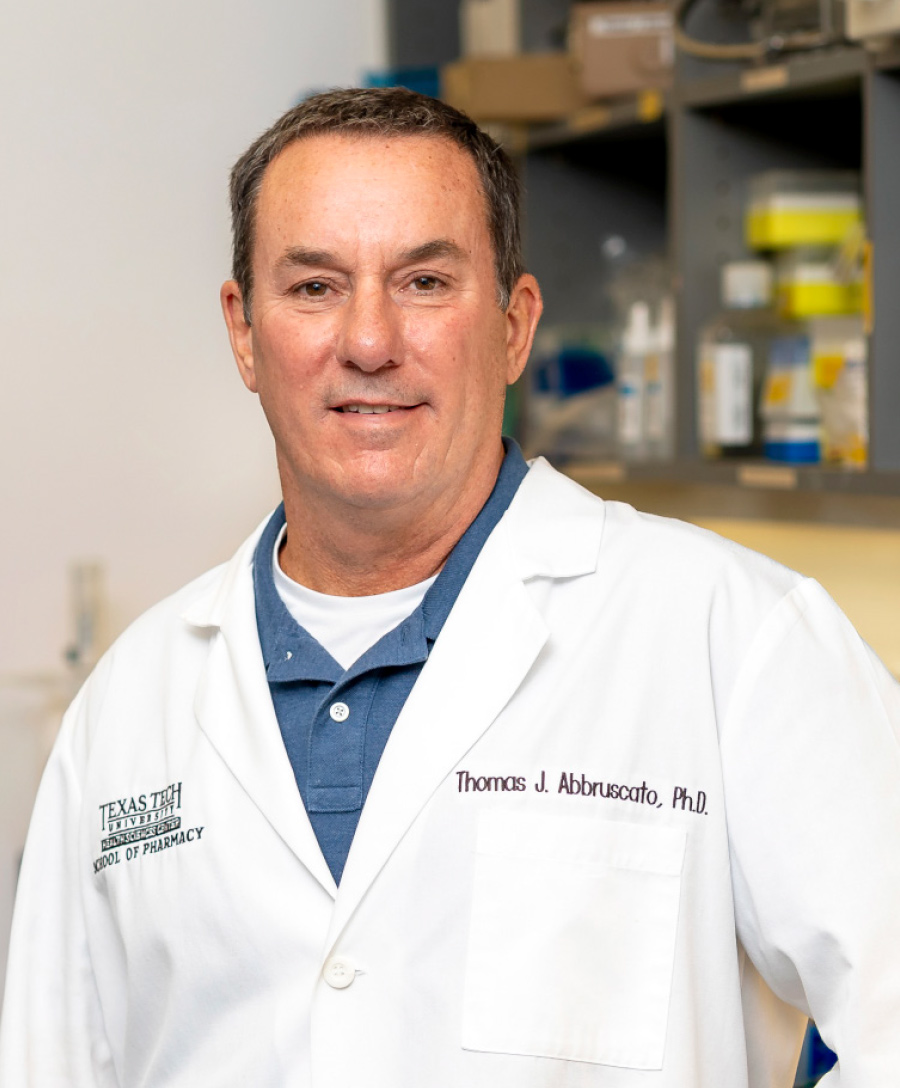
Ahmed and a team at UT Southwestern Medical Center started this research in 2018. Over seven years, they screened about 30 heart drugs to discover how to restore the growth of cardiac cells, which humans cannot do naturally. They discovered that antibiotics like paromomycin and neomycin have the potential to aid in cell generation.
He and a team of collaborators at the University of Arizona are looking for a path to clinical trials to test the repurposed drugs. A more long-term goal is to find other molecules that could lead to regeneration.
“I would describe myself at the interface between chemistry and biology trying to induce cardiomyocytes regeneration,” Ahmed says.
Probe: Advancing knowledge through innovative research
 Feature
Research: It’s a Family Affair
n the research arena, collaborations often form among investigators within the same university system, school or department. However, collaborative efforts may also include investigators from different universities, companies or countries. At the Jerry H. Hodge School of Pharmacy in Abilene, one of the most significant collaborations occurs between two researchers who share the same breakfast table.
In the mid-1980s, Maciej Markiewski, MD, PhD, left his home in Rzeszów, in the southeast corner of Poland, to attend the Pomeranian Medical University in Szczecin, in Poland’s northwest corner near the German border and the Baltic Sea.
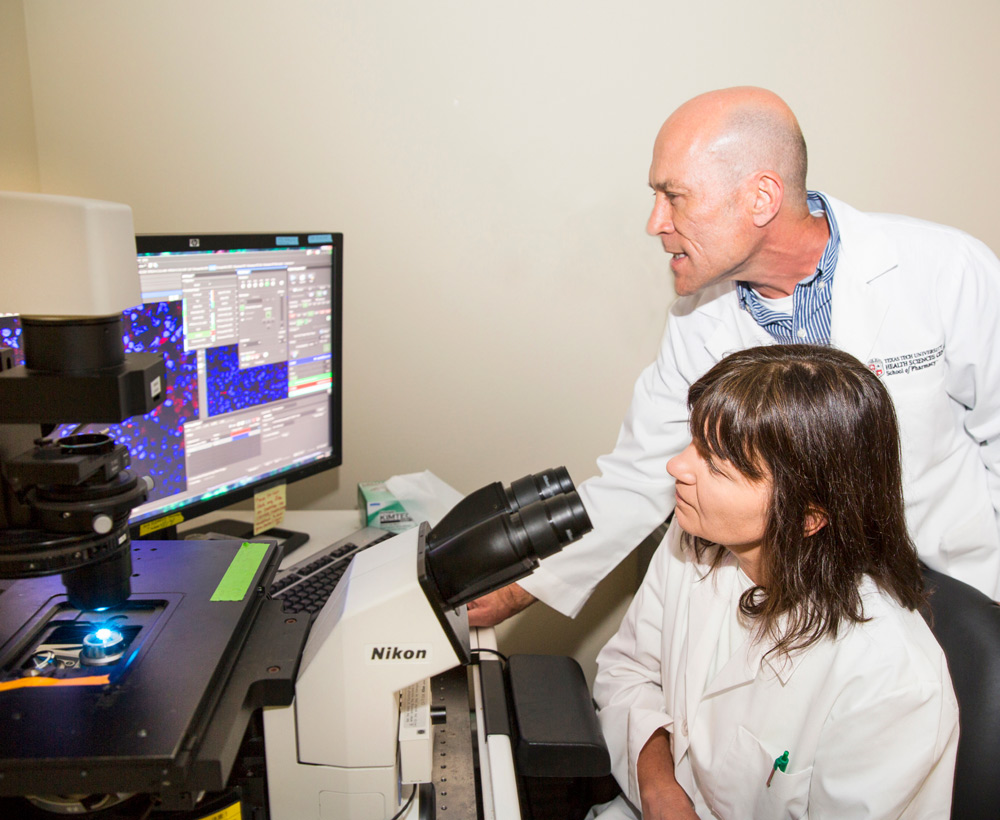
During those years, Magdalena Karbowniczek, MD, PhD, a Szczecin native, enrolled in the same Polish university. A few years later, she joined Markiewski’s department, also as a pathologist.
Preventative ActionResearcher, CPRIT Bring ACTION to Big Country
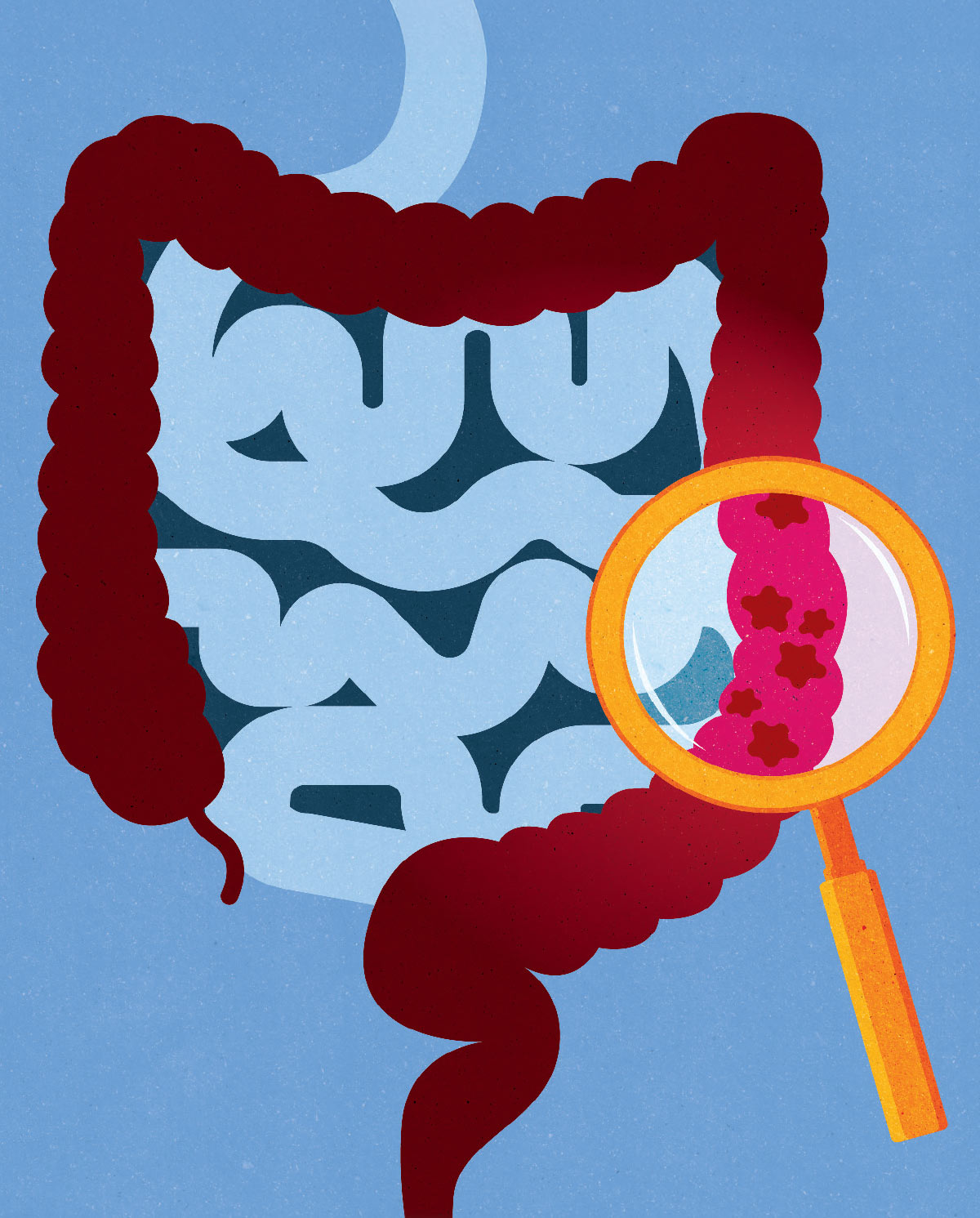
For residents of Abilene, Texas, and surrounding communities, cost is not a barrier to receiving screenings, thanks to the TTUHSC ACTION (Against Colorectal Cancer Together in Our Neighborhoods) for Big Country program. Julie St. John, DrPH, MPH, an associate professor in the School of Health Professions, is the principal investigator and project director for the program, which provides education, fecal immunochemical test (FIT) screenings and colonoscopy services to uninsured or underinsured individuals.
“Colorectal cancer is the only cancer screening that can prevent cancer by removing precancerous polyps during colonoscopy,” St. John says.
ACTION for Big Country is made possible through a Prevention Program grant from the Cancer Prevention and Research Institute of Texas (CPRIT). The project serves 14 counties in the Big Country: Brown, Callahan, Coleman, Comanche, Eastland, Erath, Fisher, Haskell, Jones, Knox, Nolan, Shackelford, Stephens and Taylor.
researcher updatesKey Findings
Gift to Accelerate UTI Research
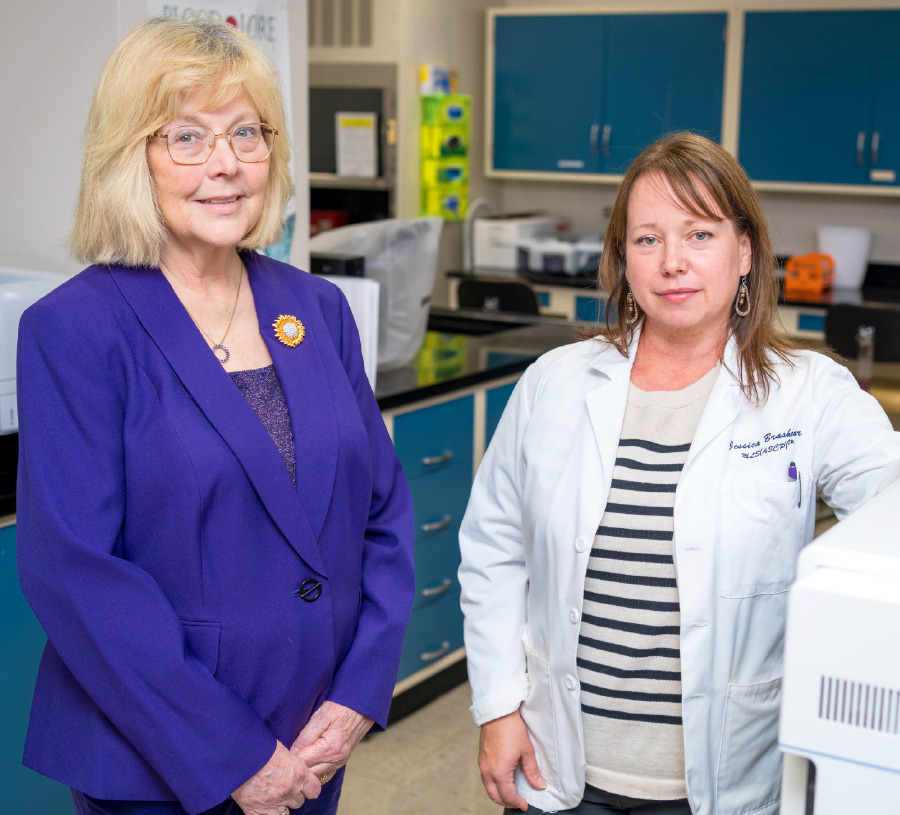
Aided by the gift, TTUHSC’s Alyce Ashcraft, PhD, RN; Donna Owen, PhD, RN; and Jessica Brashear, DCLS (Health Professions ’10, ’09); and TTU’s Dimitri Pappas, PhD, are collaborating to create a long-term analytical sensing and laboratory technologies program to reveal UTI presence at the point-of-care, looking first at older women. The goal is to improve quality of life by creating more accurate and timely methods to diagnose and treat UTIs, advancing precision care and reducing unnecessary antibiotic use.
Brain Research Reaps Rewards, New Protection Treatment
Father of Fitness

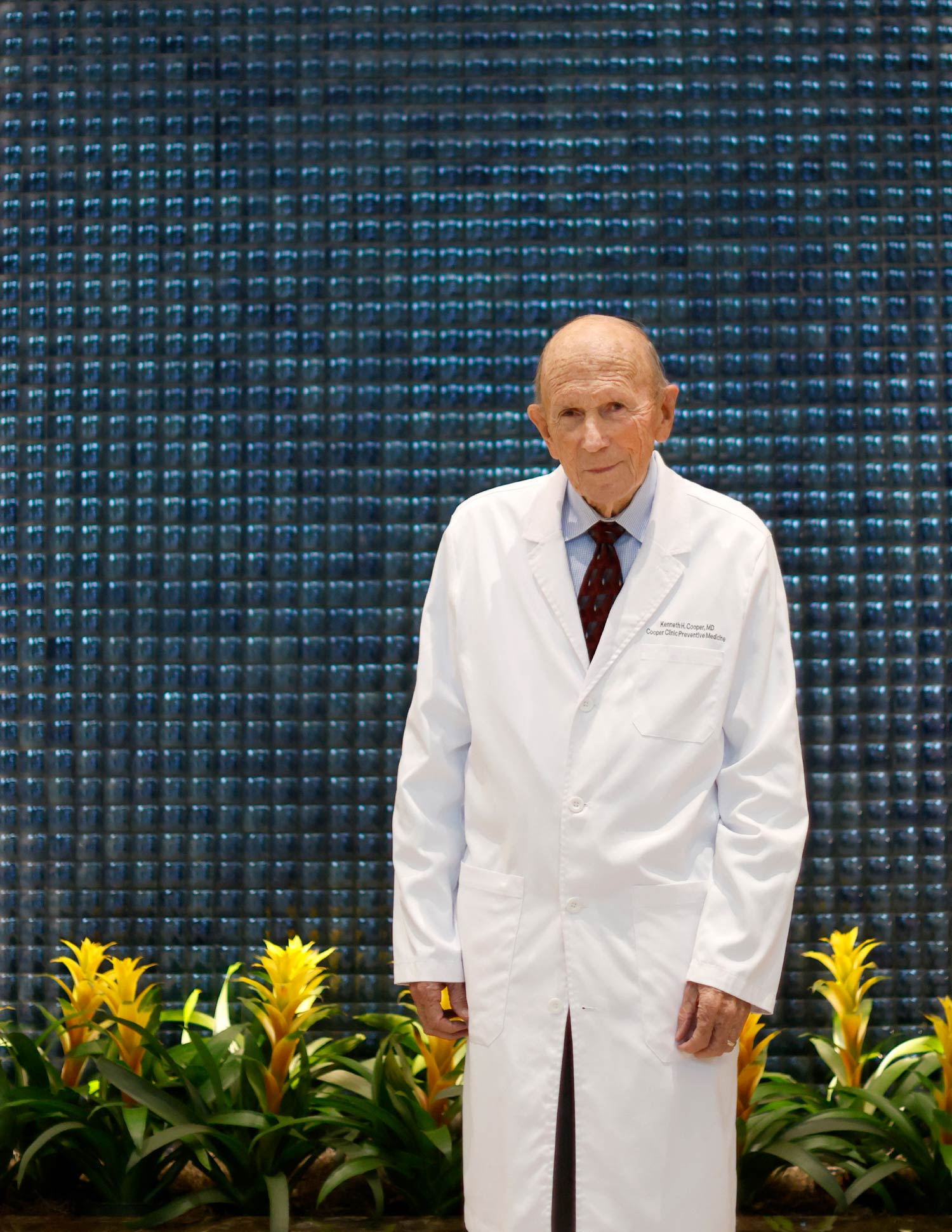

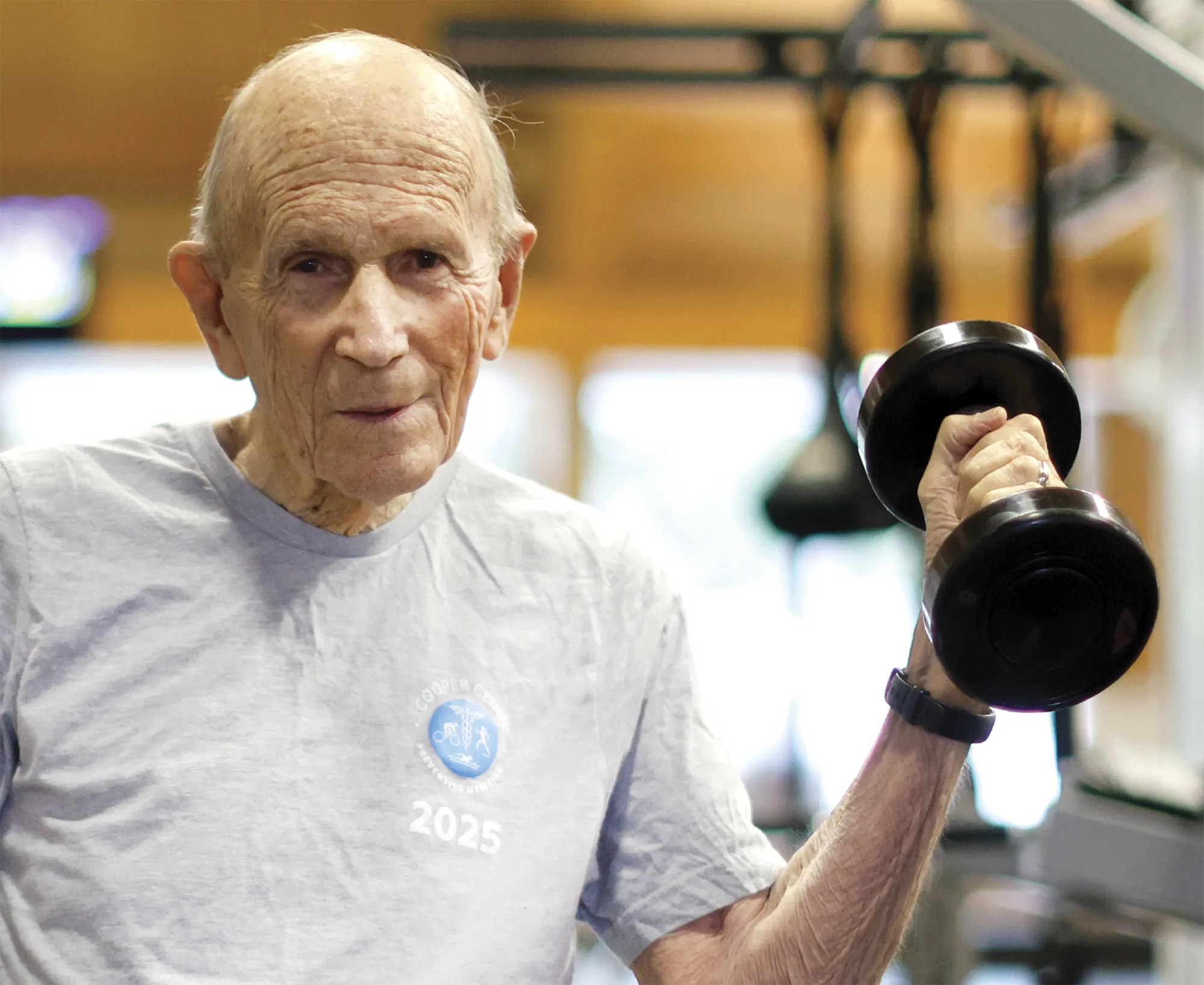
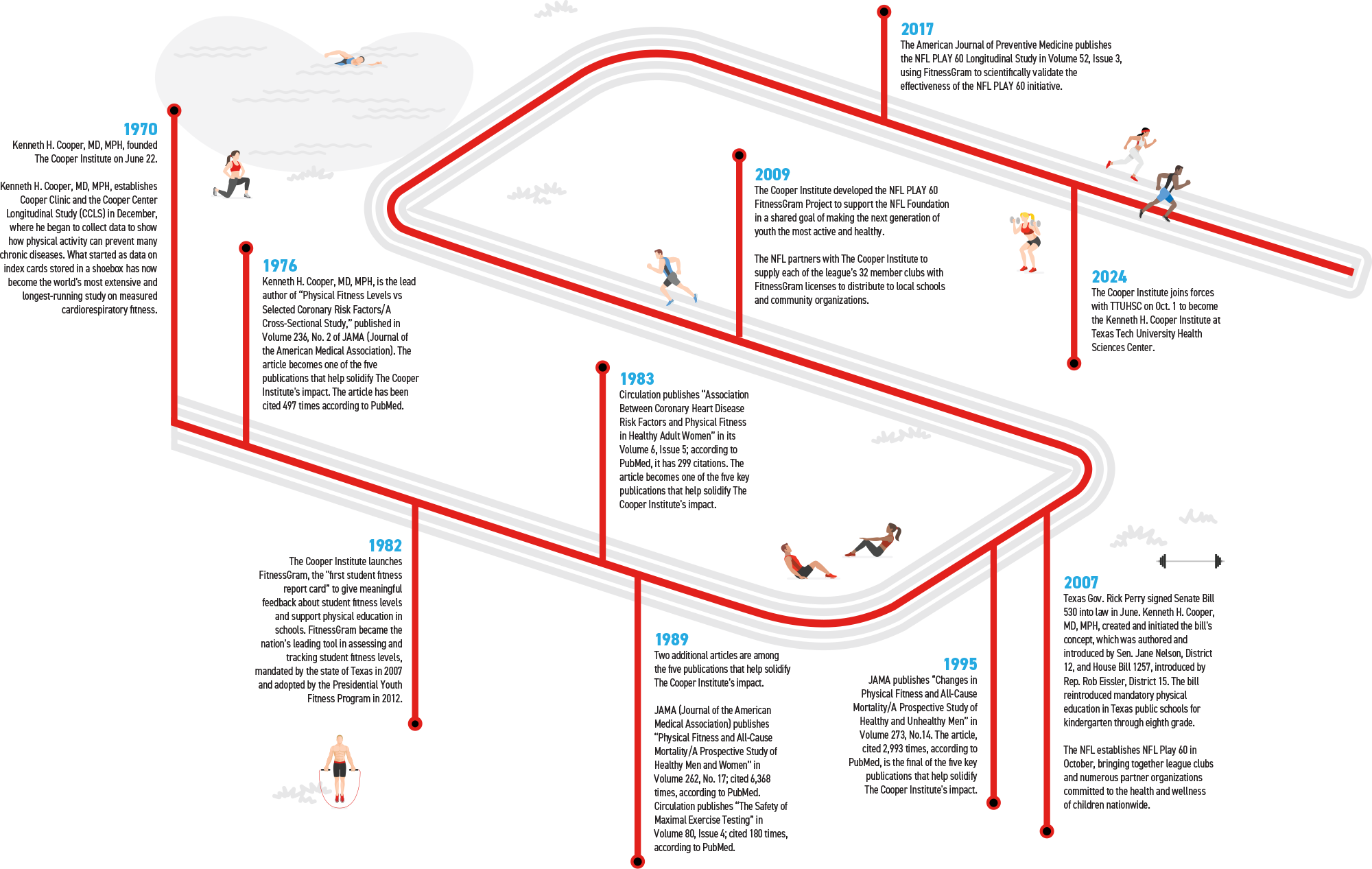
Today, of course, we know better. And Kenneth H. Cooper, MD, MPH is the man largely responsible for that change in thinking.
Cooper burst into national prominence in 1968 with the publication of his first book, “Aerobics,” in which he argued that cardiovascular exercise is good for the body in multiple ways and can, in fact, prolong your life. The book became an international bestseller and triggered a fitness revolution that’s still going strong today. It also launched a storied career for Cooper, who founded Cooper Aerobics Center in Dallas, Texas, in 1970 and went on to help tens of thousands of people across the globe get fit — or, as he likes to call it, Get Cooperized.
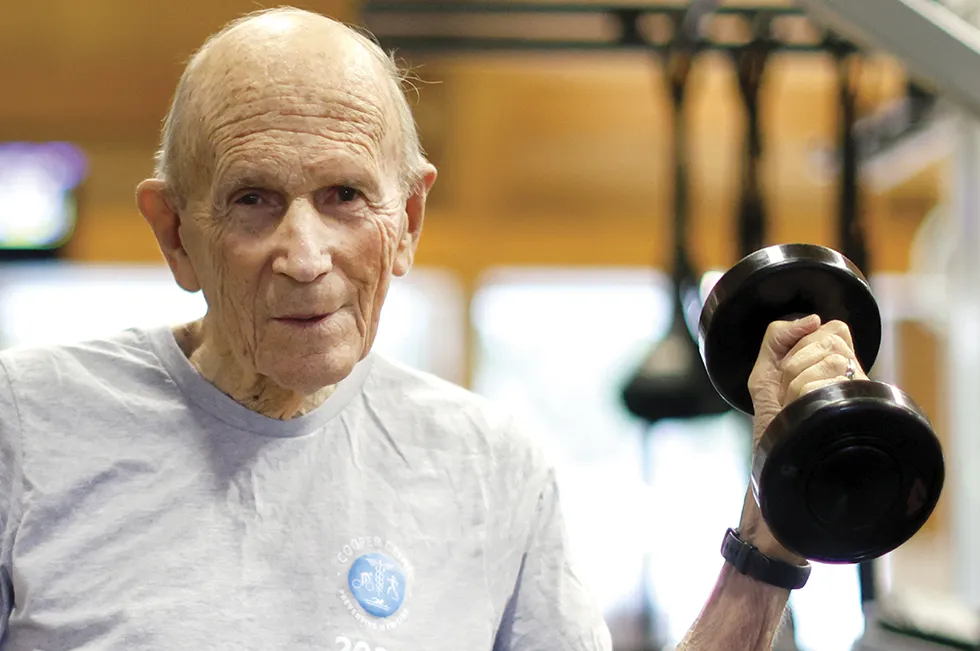
Nearly 60 years after the publication of “Aerobics,” Cooper, who will be 95 in March, had his 20th book published last summer. He still sees a few patients at Cooper Clinic (one of six health and wellness companies under the Cooper Aerobics umbrella). However, he’s handed over the CEO role to his son, Tyler Cooper, MD, MPH. In October 2024, Cooper Aerobics’ nonprofit research arm, The Cooper Institute, became a part of TTUHSC. Officially called the Kenneth H. Cooper Institute at Texas Tech University Health Sciences Center, the partnership ensures that the massive database of consented and deidentified data —and the research associated with it — will continue for years to come.
The Road to Now

The Mask I Wore


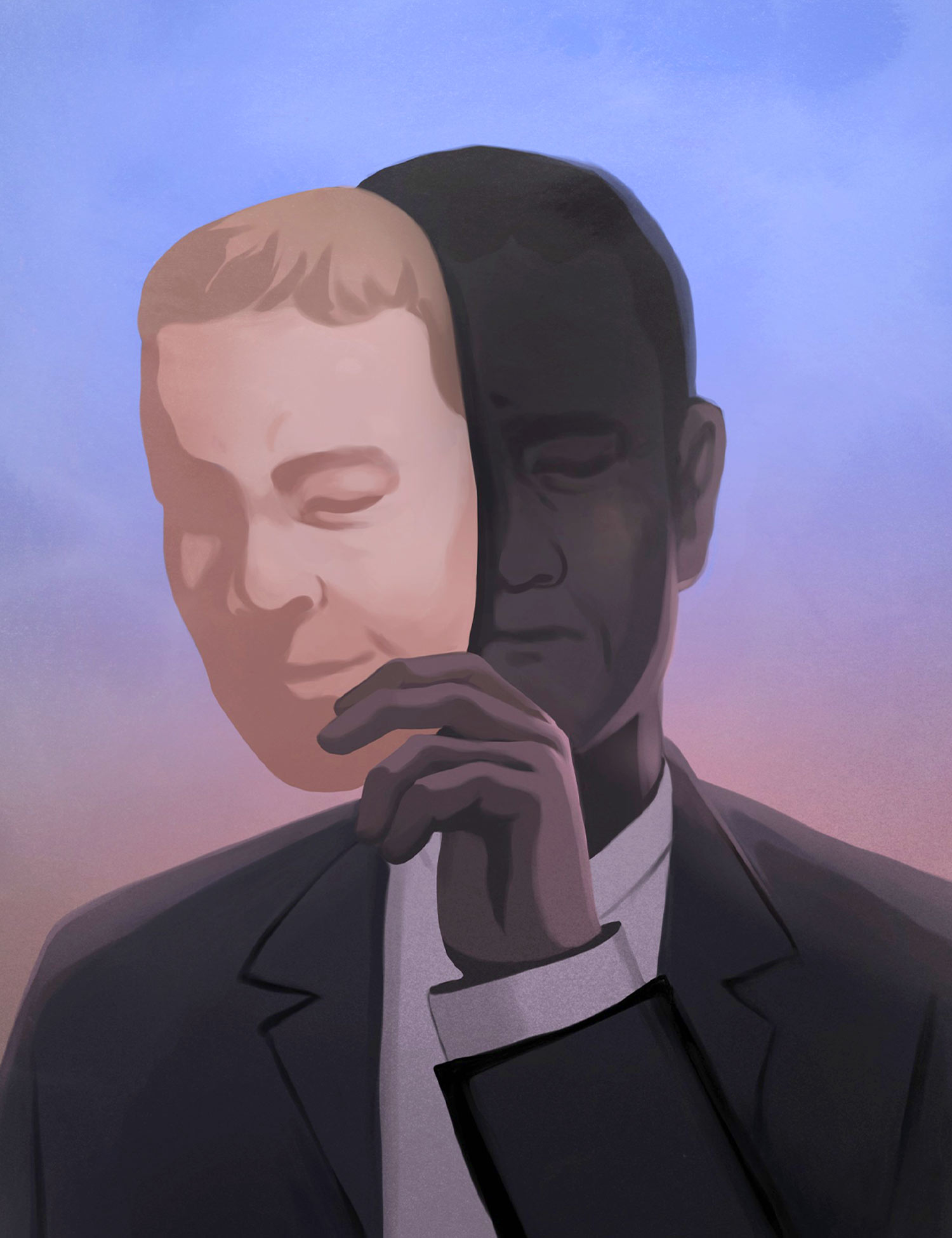
EDITOR’S NOTE: The story you will read is personal, yet it reflects a wider truth in health care. National surveys show that about one in four health care workers report mental distress at a level consistent with a diagnosable condition. A Centers for Disease Control study also found that nearly half of the health care workforce experiences burnout, which often fuels anxiety and depression.
These numbers remind us that caring for others begins with caring for ourselves.

never imagined that a person who had dedicated his life to leading others through crises would one day find himself in his own.
For years, I wore the mask of a chief nursing officer, a symbol of strength, stability and purpose. I led hospitals to achieve excellence designations such as the American Nurses Credentialing Center’s Magnet and Pathway to Excellence, celebrated many successes and stood on stages reminding others to care for themselves, to lead with heart, to practice gratitude. But behind that mask was a man silently struggling to stay alive.
My story isn’t easy to tell, but I’ve learned that the stories that make us tremble most often have the power to heal — not just ourselves, but others, too.







 Feature
Opportunity to Influence
n 1985, Rhonda Collins was living with her husband and two small children in a small house in Texarkana, Texas. Her husband, a mechanic, worked two jobs to make ends meet. Collins was restless for something more and dreamed of going to nursing school — but it was out of the question: “We were broke.”
A chance conversation at a choir practice would change all of that.
Today, Collins, DNP, RN, (Nursing ’18, ’97) is a globally respected nursing leader, with nearly three decades of experience: staff nurse, hospital vice president, executive at four medical technology companies. She has published journal articles and spoken at nursing conferences worldwide. She is also co-founder of the award-winning American Nurse Project, which amplifies the voices of nurses nationwide.
Coffee Date
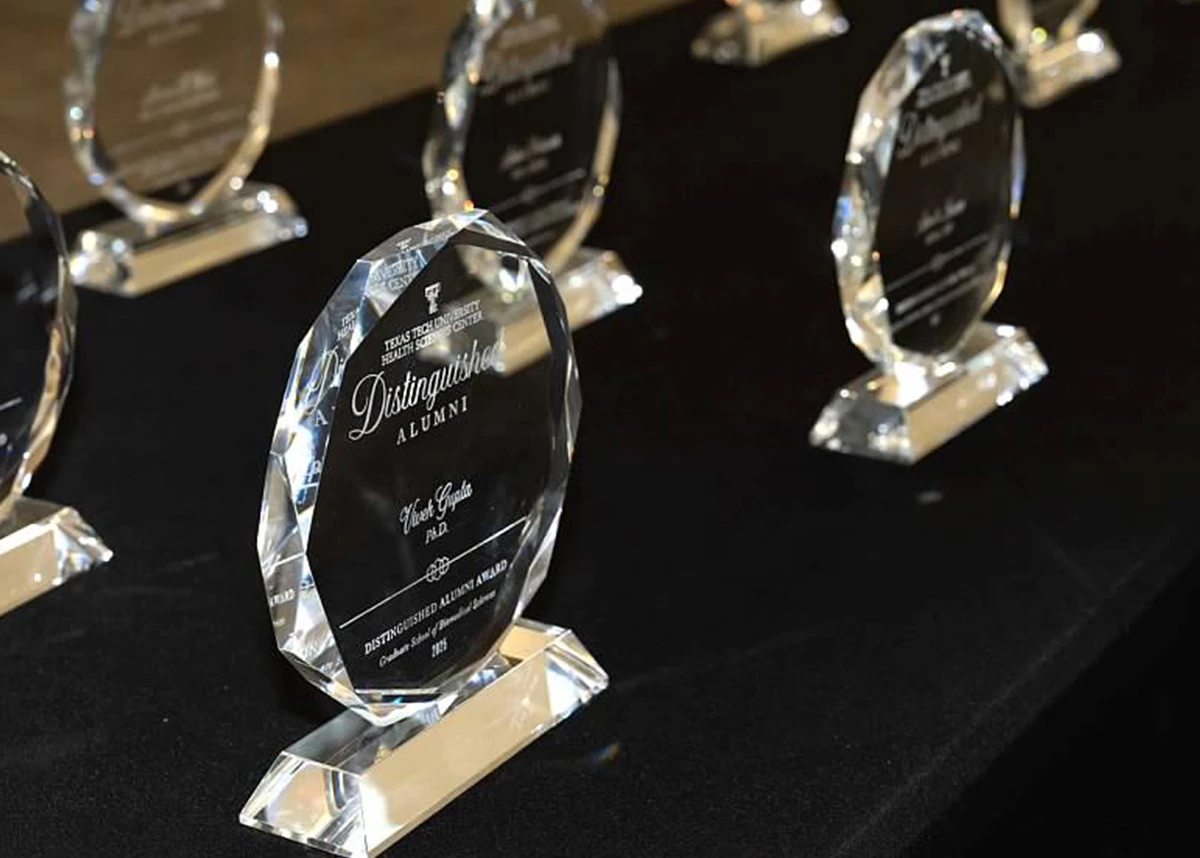
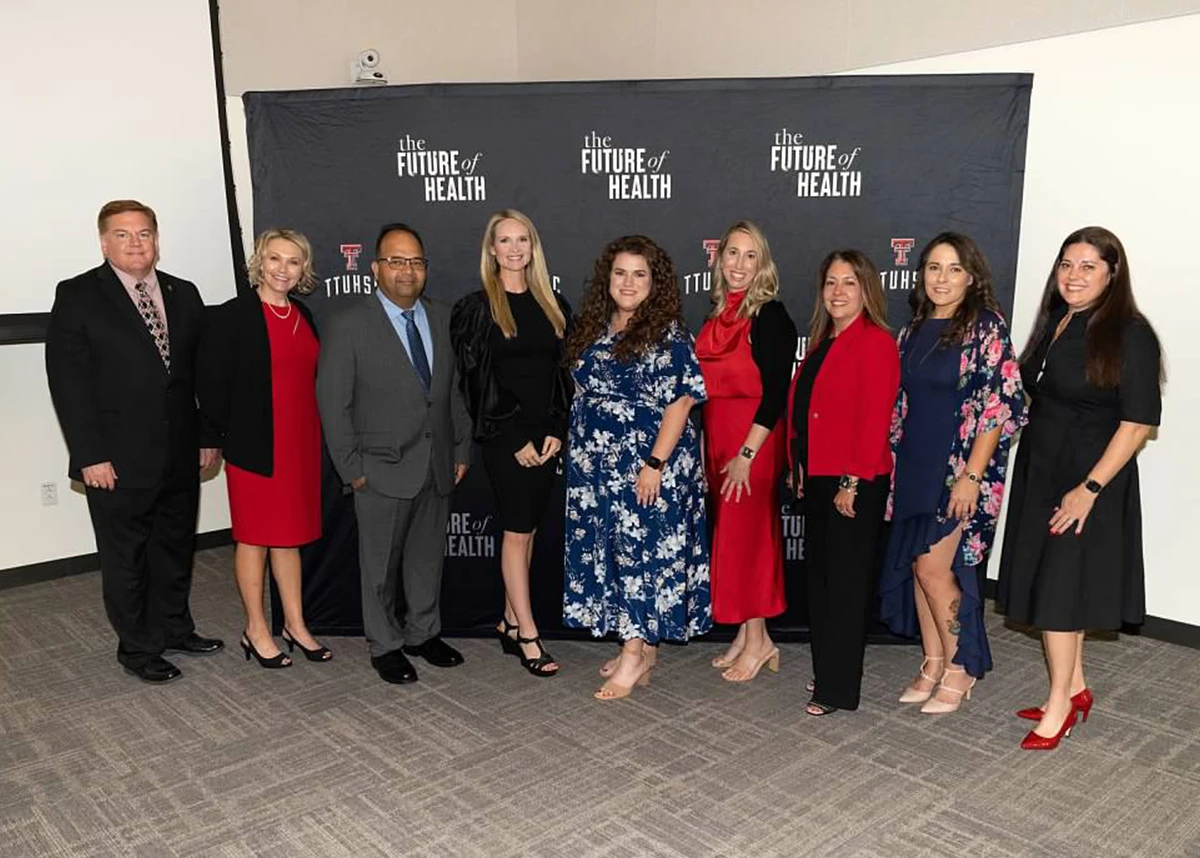
School of Health Professions Distinguished Alumni awards

Amount raised by Health Professions alumni association members in the past three years

Number of endowments established by Health Professions alumni

Gifts to Health Professions learners from alumni
Love Keeps Brewing
DJ Sutton (Health Professions ’13) wasn’t expecting to meet the love of her life in Lubbock’s well-known J&B Coffee, a favorite among community members. In fact, she was just going to study; however, her roommate had a guy in mind she wanted DJ to meet.
Meanwhile, Tyler Sutton, DPT, (Health Professions ’18) wasn’t expecting his laptop to die while he was studying — but a student has never been so happy to be left without a charger. He got to ask DJ for a charger, and it was a meet-cute fit for a rom-com.
Years later, they’d get married and have three children. And then, they would buy the coffee shop where they met.
Tyler worked at the coffee shop as a barista, so he knew owner Scott Cline for years. About a year ago, he approached the owner and said he’d buy the shop if the owner ever sold it. Tyler’s known for a while he wanted to own a business, and this is one that meant something to his family.
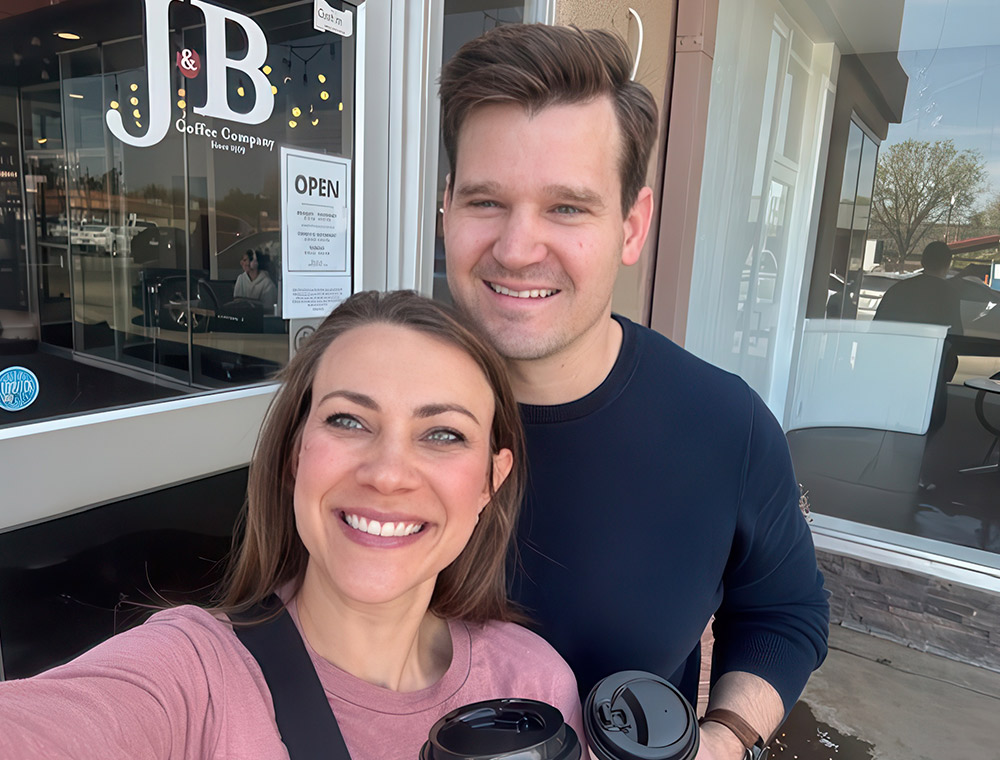
It was always a “it would be great one day” kind of conversation, DJ says. But then the sale became real. And suddenly, a place that held so much of their past became their children’s future.
When DJ reflects on the choices that led them to owning J&B, she recalls how they were actually studying physical therapy and had no idea they would one day be business owners.
“What you get your degree in doesn’t have to be what you do for the rest of your life,” she says.
The couple wants to keep the essence of the coffee shop alive, a place where college learners can come to study, relax, have a great cup of coffee and maybe even meet the love of their life.
Love Keeps Brewing
DJ Sutton (Health Professions ’13) wasn’t expecting to meet the love of her life in Lubbock’s well-known J&B Coffee, a favorite among community members. In fact, she was just going to study; however, her roommate had a guy in mind she wanted DJ to meet.
Meanwhile, Tyler Sutton, DPT, (Health Professions ’18) wasn’t expecting his laptop to die while he was studying — but a student has never been so happy to be left without a charger. He got to ask DJ for a charger, and it was a meet-cute fit for a rom-com.
Years later, they’d get married and have three children. And then, they would buy the coffee shop where they met.
Tyler worked at the coffee shop as a barista, so he knew owner Scott Cline for years. About a year ago, he approached the owner and said he’d buy the shop if the owner ever sold it. Tyler’s known for a while he wanted to own a business, and this is one that meant something to his family.
It was always a “it would be great one day” kind of conversation, DJ says. But then the sale became real. And suddenly, a place that held so much of their past became their children’s future.
When DJ reflects on the choices that led them to owning J&B, she recalls how they were actually studying physical therapy and had no idea they would one day be business owners.
“What you get your degree in doesn’t have to be what you do for the rest of your life,” she says.
The couple wants to keep the essence of the coffee shop alive, a place where college learners can come to study, relax, have a great cup of coffee and maybe even meet the love of their life.
School of Health Professions Distinguished Alumni awards
Amount raised by Health Professions alumni association members in the past three years
Number of endowments established by Health Professions alumni
Gifts to Health Professions learners from alumni
Home Field AdvantageThe Doctor in the Dugout
When that dream came true, it took her to the world stage.
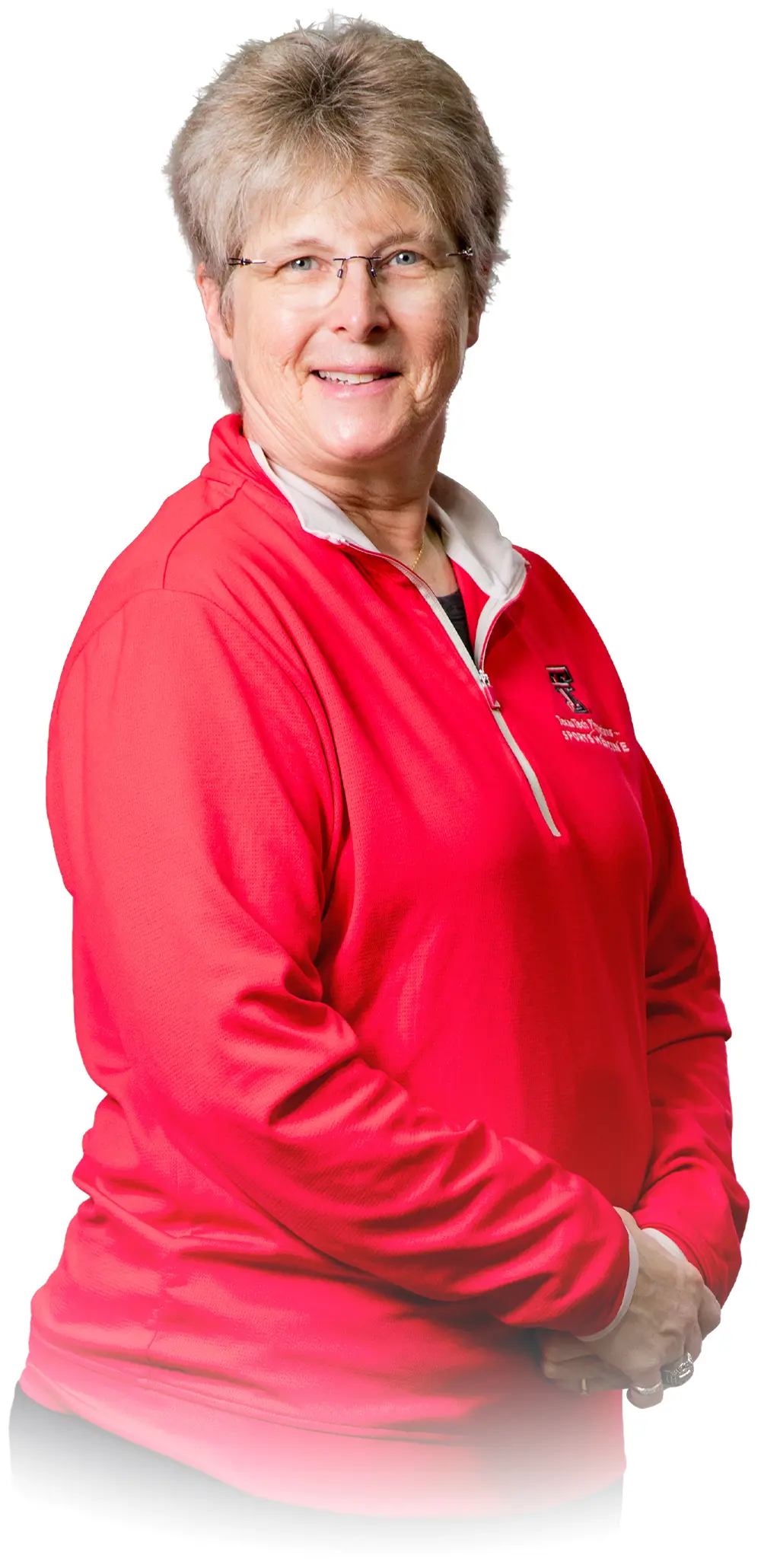
During Texas Tech University’s historic 2025 NCAA Women’s College World Series softball run, Mitchell served as the team physician. As director of the sports medicine fellowship, she trains the next generation of sports medicine physicians, while providing care for 10 TTU teams, working alongside a dedicated staff of athletic trainers, doctors, nutritionists and other health care professionals. Mitchell could be seen in the dugout just as anxious as the rest of the TTU’s softball fans — but for different reasons.
However, the team taking care of the team can’t just watch the games as fans.
“You’re there to take care of them,” Mitchell says. “It’s great fun to be able to also celebrate with them, but your ultimate responsibility is the health of the athlete, whatever they need and to help add to their competitive advantage. You have to stay focused on that.”
The Doctor in the Dugout
Kami Hunt
When that dream came true, it took her to the world stage.
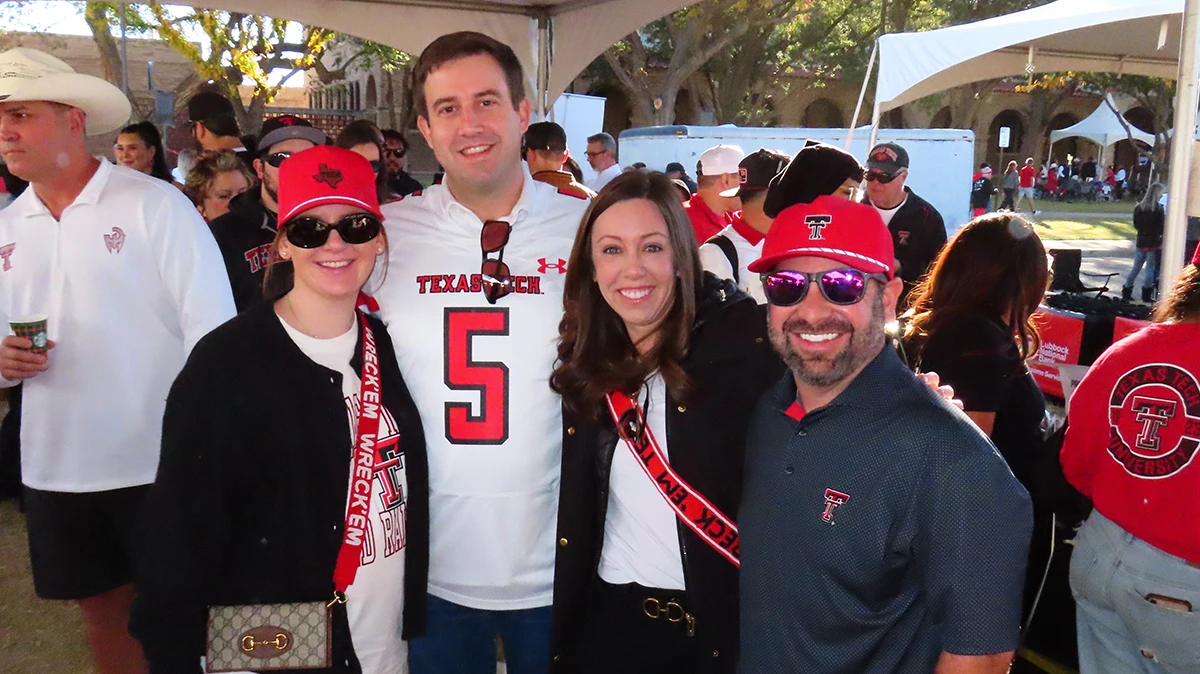
During Texas Tech University’s historic 2025 NCAA Women’s College World Series softball run, Mitchell served as the team physician. As director of the sports medicine fellowship, she trains the next generation of sports medicine physicians, while providing care for 10 TTU teams, working alongside a dedicated staff of athletic trainers, doctors, nutritionists and other health care professionals. Mitchell could be seen in the dugout just as anxious as the rest of the TTU’s softball fans — but for different reasons.
However, the team taking care of the team can’t just watch the games as fans.
“You’re there to take care of them,” Mitchell says. “It’s great fun to be able to also celebrate with them, but your ultimate responsibility is the health of the athlete, whatever they need and to help add to their competitive advantage. You have to stay focused on that.”
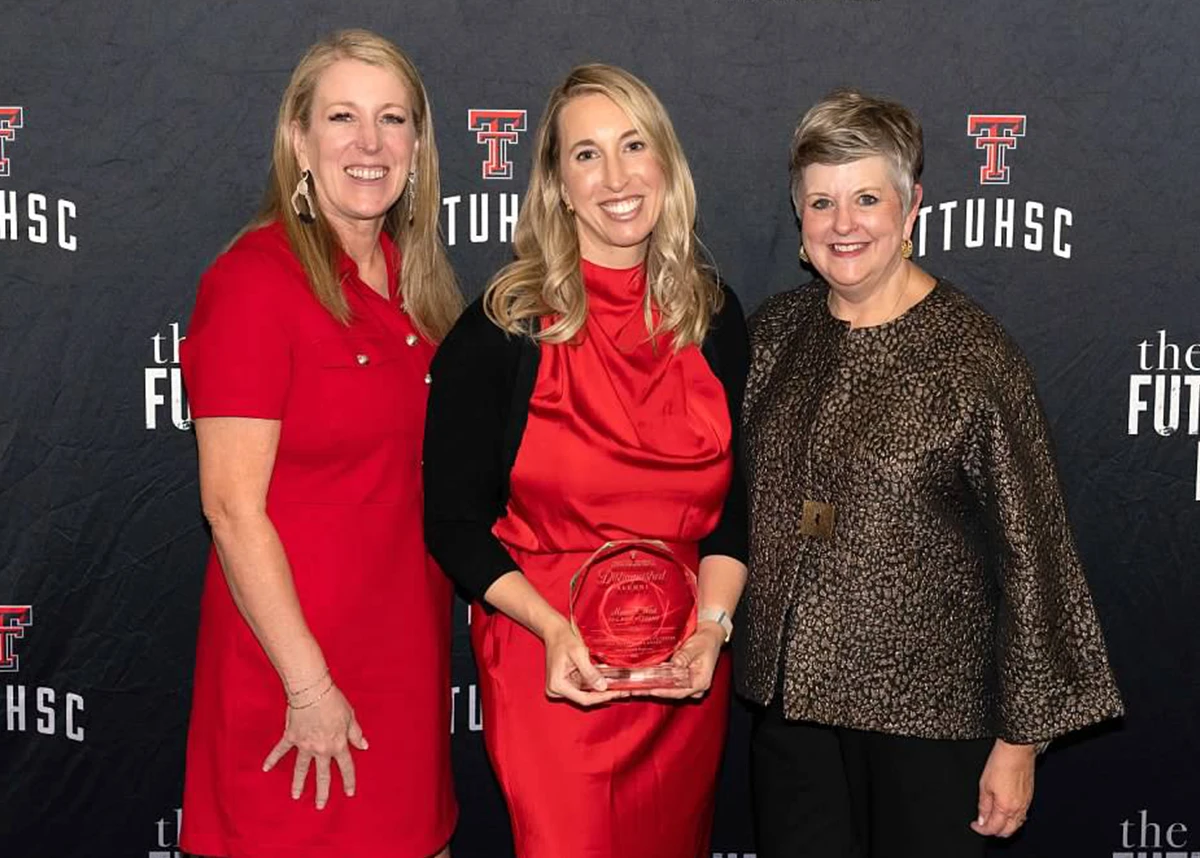

Update Catching Up With TTUHSC Alumni & Friends
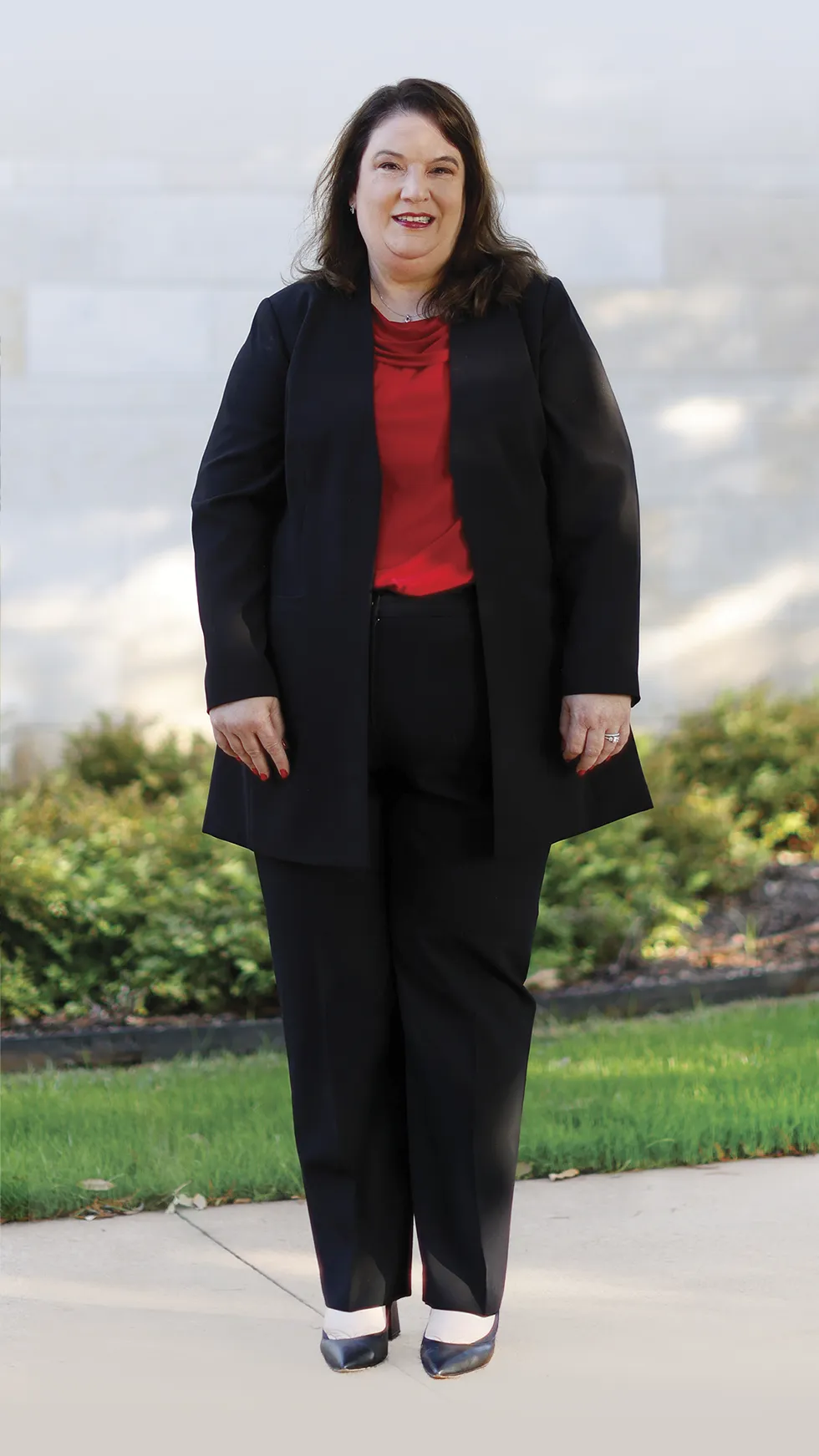
Traci Holton, PharmD, MBA
‘the crazier the better’
She was one of 60 learners (which she calls “pioneers”) in the school’s inaugural class, circa 1996. Back then, not every day looked the same and today it still doesn’t – “the crazier, the better,” Holton says.
Now, in her work, she thrives in opportunities to drive change to benefit the patients, leveraging the attention to detail she learned in school and her ability to analyze situations to develop strategies and solutions.
“You learn far more in the midst of a crisis than during routine operations because you’re compelled to adapt,” Holton says. “The advantage of a disaster is that it accelerates learning — and, fortunately, people also tend to be more forgiving during those times.”
— Michael A. Cantu
News & Notes-
School of Medicine
Adrian Billings, MD, elected as president-elect of the Texas Academy of Family Physicians. He is the associate academic dean of Rural and Community Engagement.
- Susan Davis, MD, (’84) is named the Texas Department of Criminal Justice Montford Unit Employee of the Month for November 2025.
- Joel Dickens, MD, (’89) joins Women’s Health at Valley View in Glenwood Springs, Colorado, as an OB-GYN.
- Mark Edwards, MD, (’96) appointed by Texas Gov. Greg Abbott to the Texas Medical Board District Three Review Committee.
- David Lindzey, MD, (’84) appointed by Texas Gov. Greg Abbott to the Texas Medical Board District Four Review Committee.
- John Mistrot, MD, (Residency ’25) joins Carteret Health Care Group in Morehead City, North Carolina as a surgeon.
- Ikemefuna Okwuwa, MD, elected as president of the Texas Academy of Family Physicians. He is director of the Family Medicine Residency Program at the TTUHSC School of Medicine.
- Matt Porter, MD, (’15) selected as chair of the Department of Ophthalmology and Visual Sciences at TTUHSC School of Medicine Lubbock.
- Drew Ratner, MD, MBA, (’13) opens independent orthopedic practice in Greenville, South Carolina.
- C. Patrick Reynolds, MD, PhD, named to the 2025 Class of Fellows with the National Academy of Inventors.
- Jasmine Sekhon, MD, joins UMC Health System and TTUHSC as a Hematologist and Oncologist.
- Ron Banister, MD, died July 18, 2025. He was a professor in the TTUHSC School of Medicine Department of Anesthesiology.
- Travis Roy Cain, PharmD, (Pharmacy ’23) died July 5, 2025. He was an Arizona resident since 2024.
- Jane Colmer-Hamood, PhD, (Biomedical Sciences ’97) died in July 2025. She was a faculty member in the TTUHSC Lubbock Graduate School of Biomedical Sciences Department of Immunology and Molecular Microbiology.
- Lisa Harris Gore, MS, CCC-SLP, died Aug. 30, 2025. She was an assistant professor in the Department of Speech, Language & Hearing Sciences in the TTUHSC School of Health Professions.
- Bryan Griffin, MD, (Medicine ’82) died Dec. 19, 2025. He worked with CHRISTUS Health in Texarkana, Texas, for almost 40 years.
- Robert A. Junell, JD, died Nov. 1, 2025. He was instrumental in securing appropriation requests for TTUHSC, including increasing class sizes.
- Michael Perkins, MD, (Medicine ’94) died July 25, 2025. He had practiced at Perkins Pediatric Clinic in DeRidder, Louisiana, since 2001.
- Roger Yandell, MD, died June 15, 2025. He was a faculty member in the TTUHSC Lubbock School of Medicine Department of Obstetrics and Gynecology.
Friends We’ll Miss
UpdateNews & Notes
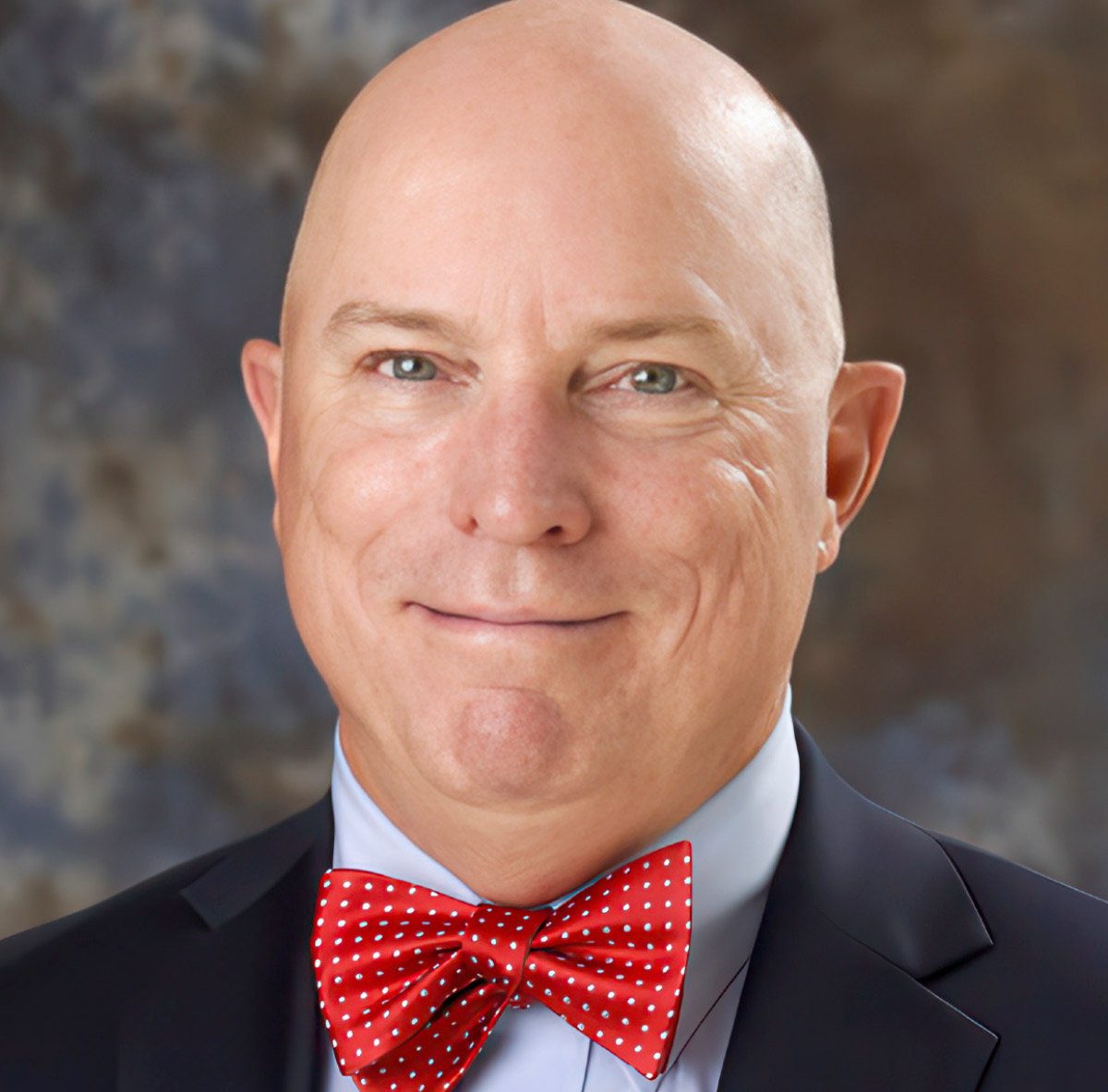
Michael Gardner, MD, MPH, MMM
University Health Women’s & Children’s Hospital San Antonio, Texas
Medicine Graduate: 1985
A legacy in leadership
“Patient care is wonderful, and I still enjoy it,” he says. “But by definition, its scope is limited.”
When he’s not in the clinic, Gardner focuses on enhancing patient outcomes at the system level, by carefully managing resources and communicating with the hospital’s physicians, nurses and staff. His fascination with how things are done propelled him into multiple management roles throughout his medical career and earned him recognition along the way, such as the Nevada Business Journal’s Humanitarian Healthcare Hero Award in 2020.
– Holly Leger
UpdateNews & Notes
Stephanie Martinez, MPH
Harlingen, Texas
Population and Public Health Graduate: 2024
Home Health
She serves the people of the place she calls home. And because the area is categorized as an underserved population area, she gets even greater joy in educating the public about health and wellness initiatives.
That same joy inspired her recent graduate project in Cameron County, Texas, to increase awareness about hepatitis A, where she noticed seasonal spikes. That project won her the Julia Jones Matthew School of Population and Public Health 2024 Outstanding Applied Experience Award.
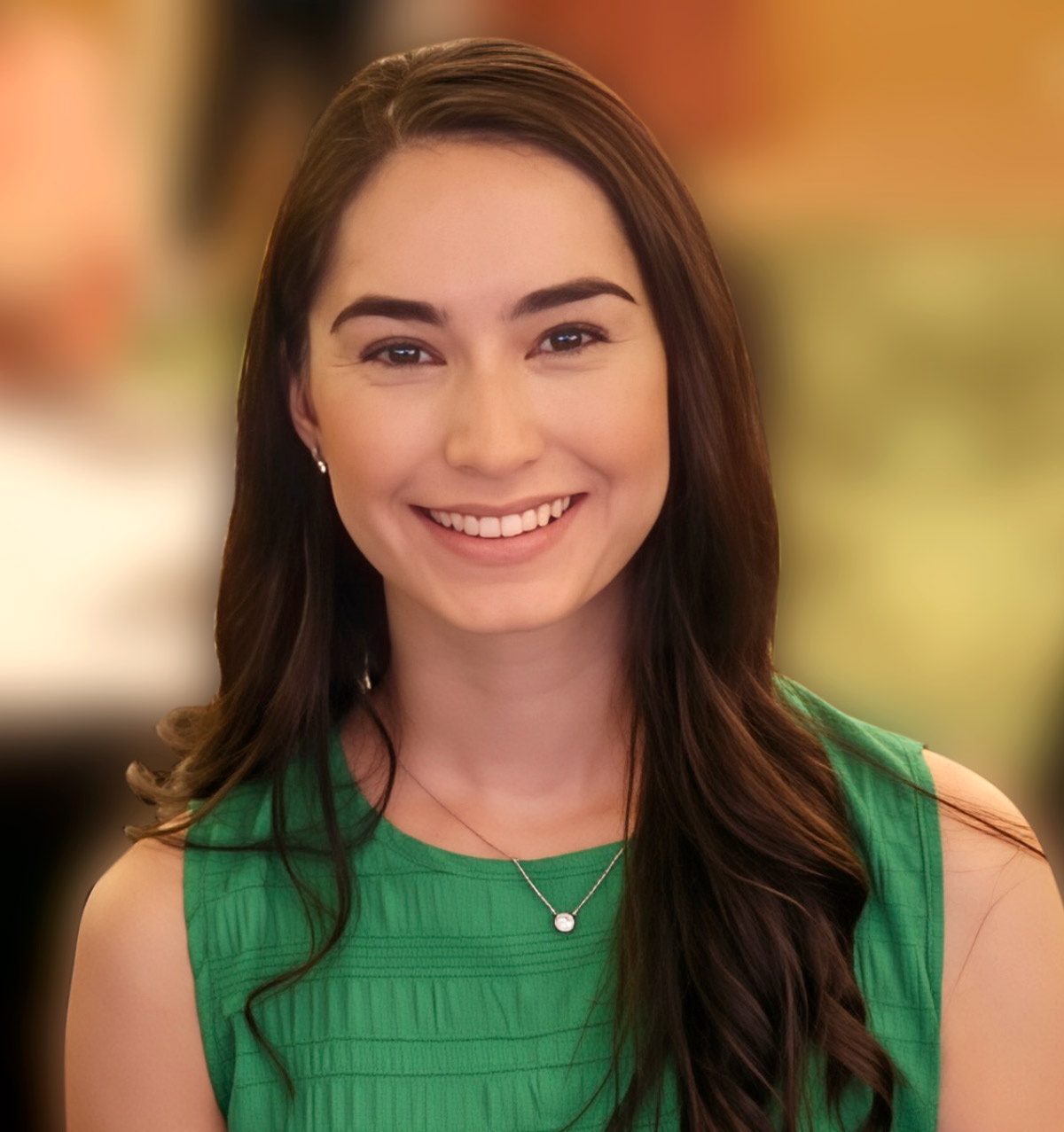
– Michael A. Cantu
UpdateNews & Notes
Paulette Woodard, DNP, MHA, RN
Medical City North Hills, North Richland Hills, Texas
Nursing Graduate: 2021; Health Professions Graduate: 2016
Path for Success
Her nursing career hasn’t been linear. She started off in food service in a St. Louis-area hospital, inspired by the caregivers around her. After earning a degree to become a registered nurse, she started her health career in Houston, Texas; working with newborns and mothers, and alongside surgeons.
In San Antonio, Texas, she earned a bachelor’s in nursing but soon made a pivot to a behind-the-scenes role as a case manager, working through insurance authorizations for patients. Then came a master’s in health care administration. Her experience was so positive, she decided to attend the school again to jump back into the world of nursing.

– Michael A. Cantu
UpdateNews & Notes
David Godino, DPT
Hemphill County Hospital District, High Plains Practice Management LLC, Canadian, Texas
School of Health Professions Graduate: 2010
Caring for his hometown
Godino says the close relationships motivate him to serve with integrity and accountability, because the very people he’s caring for are the ones who helped shape who he is today.
“People appreciate the effort you’re putting in to ensure the stability of such a valuable resource to the community,” he says.
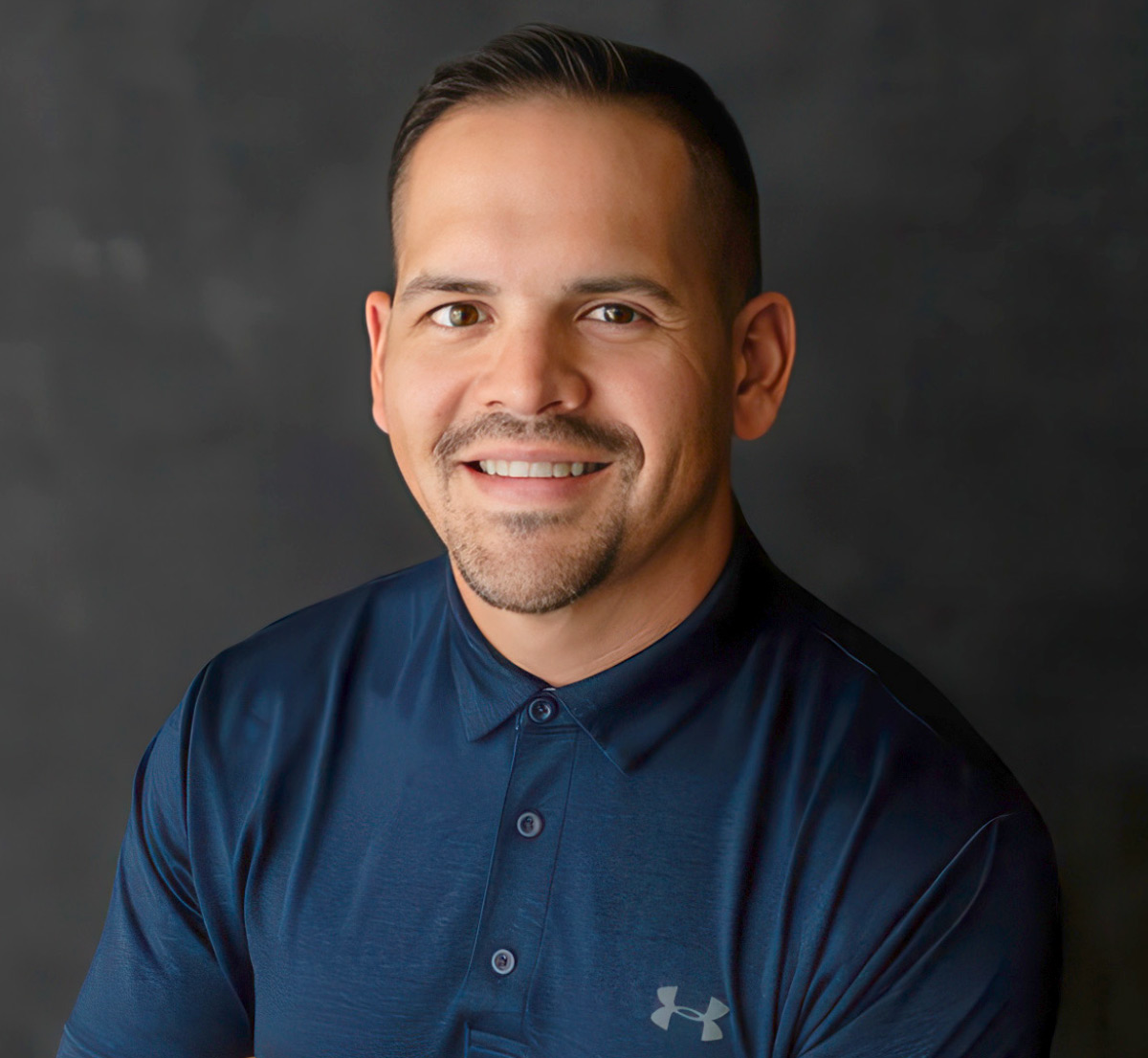
“Hopefully we can expose rural health care to a lot more providers,” he says.
– Holly Leger
UpdateNews & Notes
Shyanne Hefley, PhD
TTUHSC School of Medicine, Amarillo, Texas
Biomedical Sciences Graduate: 2019
Where Curiosity Meets Care
“I just loved science from the word ‘go,’” she says.
Now, the Amarillo native uses her passion for science to provide patients with a pathway to treatment. Hefley manages a team of research nurses and associates who coordinate clinical trials in pediatric cancer, nephrology and rare diseases at no cost to patients.
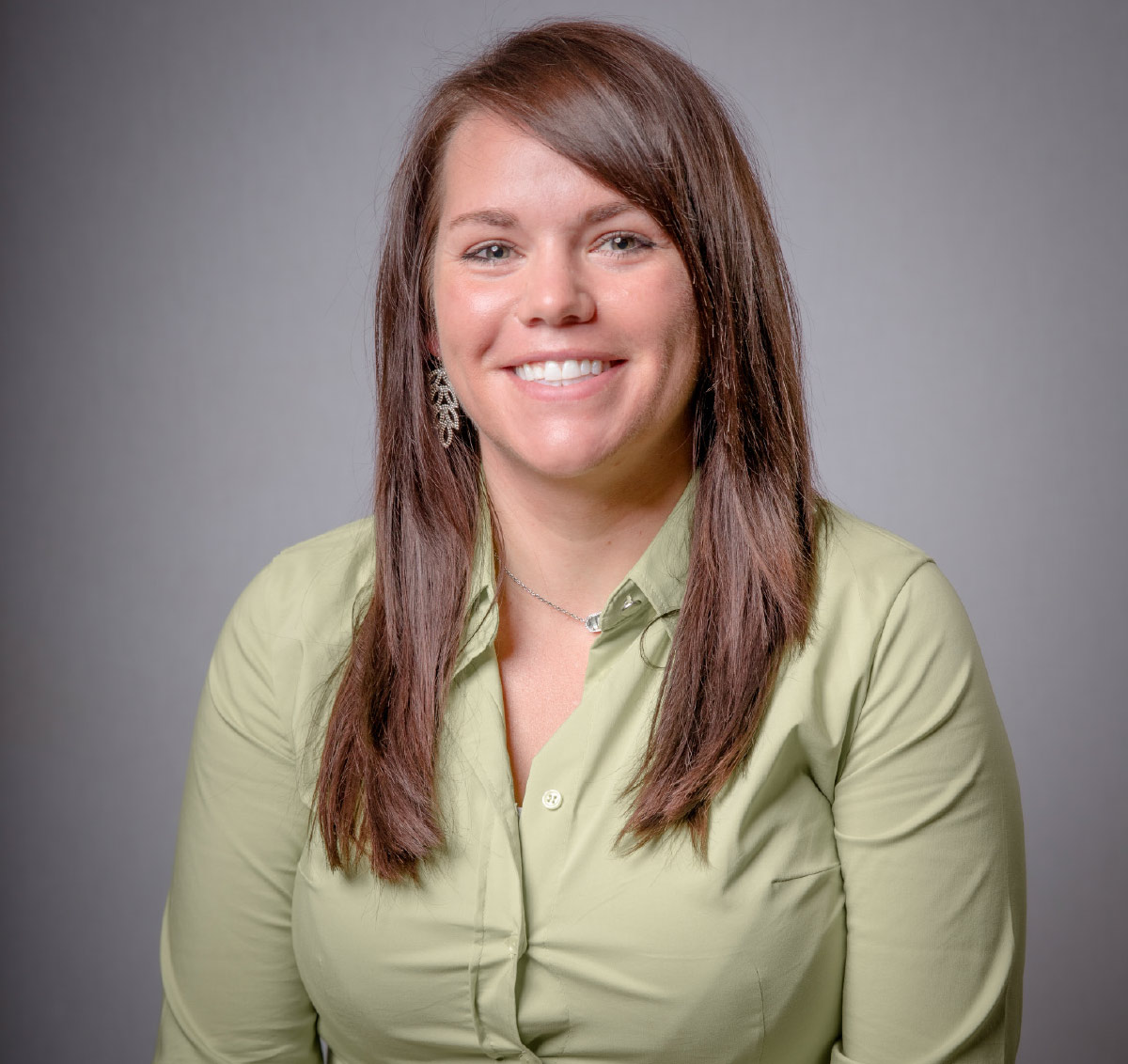
Since starting as director in 2024, Hefley has restructured the research unit by streamlining management. One of her goals is to offer a free, self-paced course to the unit’s students, faculty and staff.
“One of my biggest initiatives that I really wanted to see here is educating people on research, so they can know what to do and how to formulate their own studies and move forward as independent researchers.”
– Holly Leger