

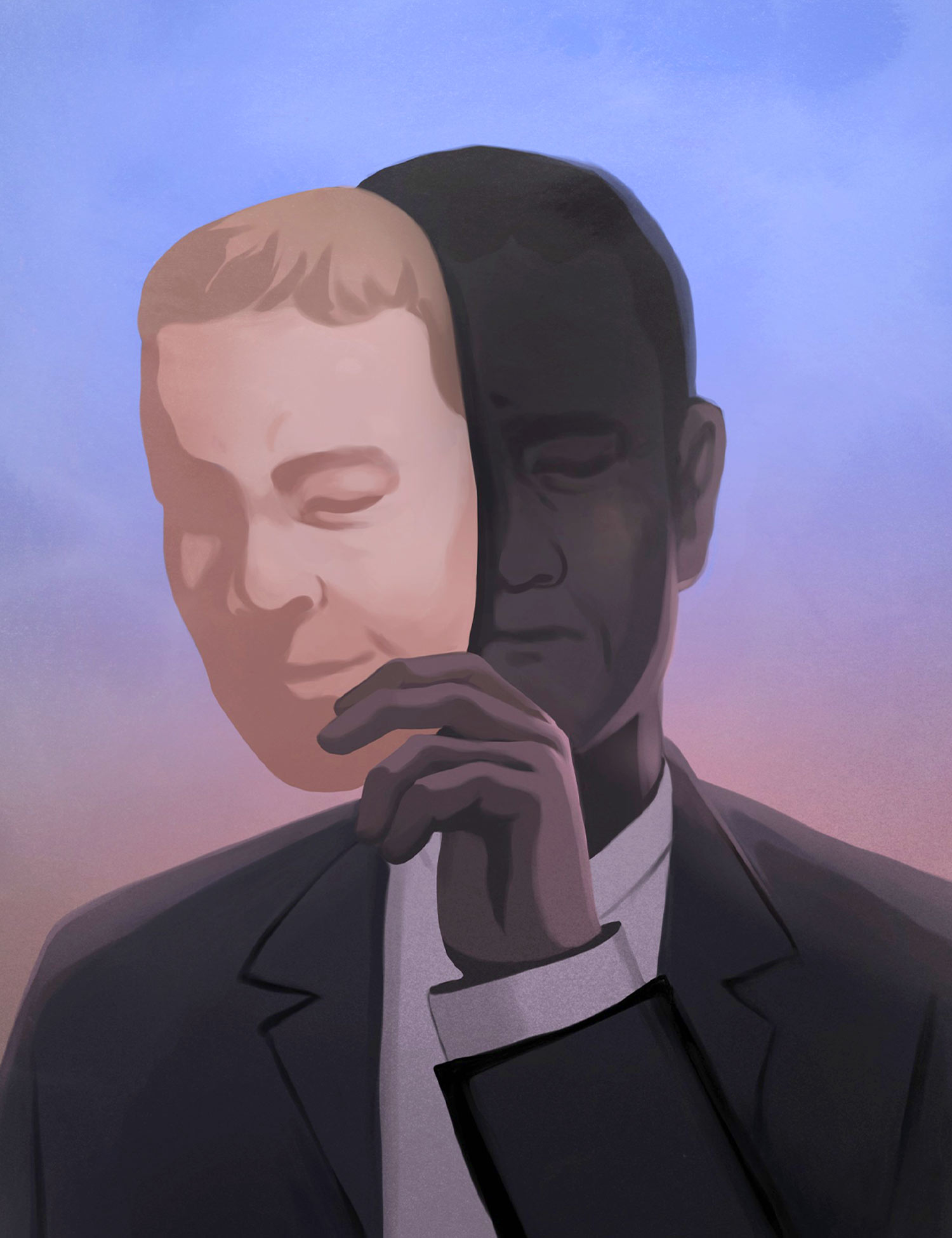
The Mask I Wore

Listen to This Issue’s Feature Article

EDITOR’S NOTE: The story you will read is personal, yet it reflects a wider truth in health care. National surveys show that about one in four health care workers report mental distress at a level consistent with a diagnosable condition. A Centers for Disease Control study also found that nearly half of the health care workforce experiences burnout, which often fuels anxiety and depression.
These numbers remind us that caring for others begins with caring for ourselves.

never imagined that a person who had dedicated his life to leading others through crises would one day find himself in his own.
For years, I wore the mask of a chief nursing officer, a symbol of strength, stability and purpose. I led hospitals to achieve excellence designations such as the American Nurses Credentialing Center’s Magnet and Pathway to Excellence, celebrated many successes and stood on stages reminding others to care for themselves, to lead with heart, to practice gratitude. But behind that mask was a man silently struggling to stay alive.
My story isn’t easy to tell, but I’ve learned that the stories that make us tremble most often have the power to heal — not just ourselves, but others, too.
The Mask Cracks
I learned long ago to “push through,” to work harder, achieve more and not let anyone see the cracks. As health care leaders, we’re often the ones holding everyone else together. But no one had ever taught me how to keep myself together when the lights dimmed and the hallways grew quiet.
My depression deepened into chronic suicidality. I became skilled at wearing the mask: confident executive by day, silent sufferer by night. The shame was suffocating. I told myself that seeking help would mean weakness, that I couldn’t let down my team, my family or the profession I loved.
But I was wrong.
Breaking Point
By 2021, I could no longer pretend. Medications prescribed by my provider weren’t helping, and virtual therapy left me feeling unseen. The darkness that I had managed to compartmentalize for years became unbearable.
The breaking point came in April 2022. My wife, Karen, sat beside me in a parking lot as I admitted what I had kept buried for decades: I didn’t want to live anymore. She held my hand, her voice steady but full of love, and said the words that would change my life: “You’ve carried everyone else for so long. It’s time to let someone carry you.”
That moment became the beginning of my healing.
Choosing Life and Treatment
I was diagnosed with major depressive disorder, complex post-traumatic stress disorder and chronic suicidality. At first, I resisted the labels; they felt heavy, clinical, even shameful. But over time, I learned that a diagnosis isn’t an identity. It’s a starting point for healing.
Those three months were filled with painful work: therapy, reflection and learning how to live again. I was surrounded by others who carried invisible pain, and we shared something sacred: truth. No titles. No pretense. Just people trying to find their way back to hope.
Slowly, I began to experience something I hadn’t felt in years — relief. Not happiness, not yet, but the relief that comes when the weight starts to lift and light seeps through the cracks.
By February 2024, I realized something extraordinary had happened. For the first time in over a decade, I wasn’t living with daily suicidal ideation. The noise had quieted. The mask had fallen away.
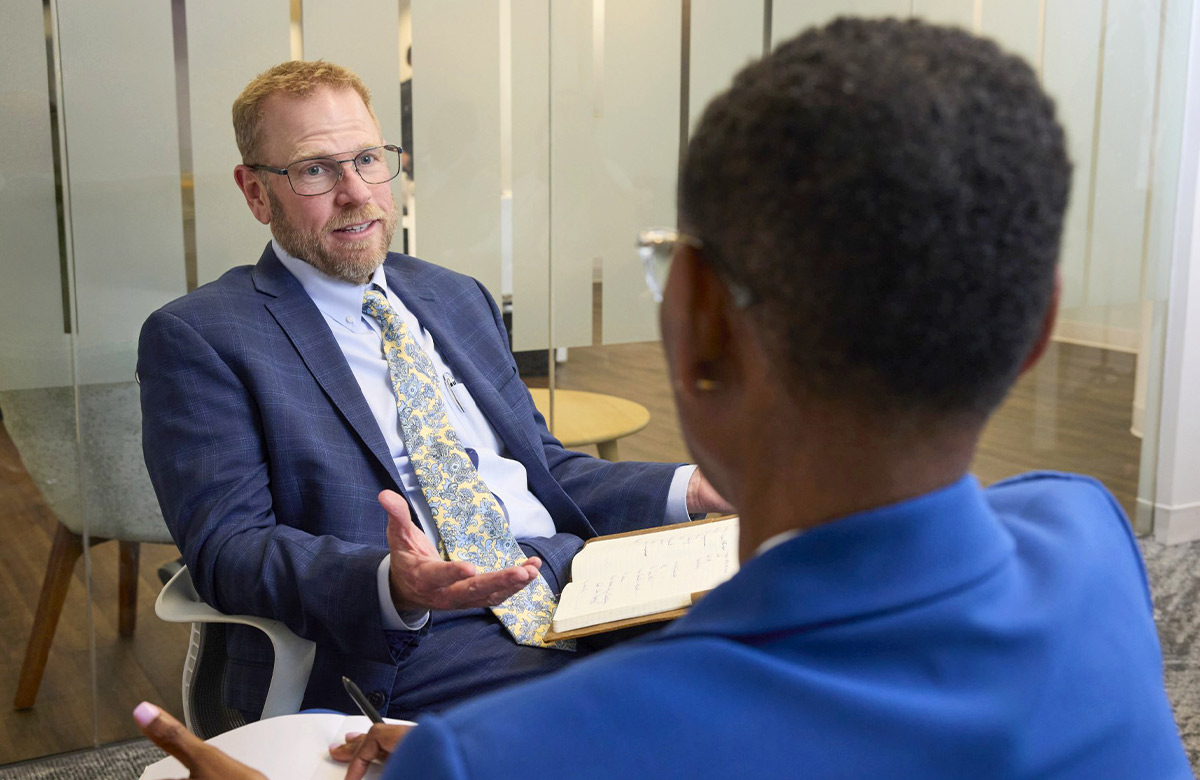
Bob Dent, DNP, MBA, RN, (Nursing ’10), is the CEO and founder of DBD Coaching & Consulting. A nationally recognized speaker, author and mental health advocate. Dent focuses on building cultures of ownership, resilience and psychological safety in health care organizations.
Finding Meaning in the Healing
Healing doesn’t mean that the struggle disappears; it means learning to walk with it differently. My faith, family and therapy became the foundation of a new way of living. I began to understand the power of presence — the sacred act of simply being instead of performing.
The health care profession I loved also became my calling in a deeper way. I realized that my pain wasn’t meant to be hidden; it was meant to be shared.
Today, I help health care leaders and organizations create psychologically safe environments where conversations about mental health are not taboo, but necessary. I speak openly about my journey at national conferences, sometimes to audiences of thousands, and each time I do, someone quietly approaches me afterward to whisper, “Thank you. That’s my story, too.”
It is those moments that remind me why I survived.
The Importance of Trusting the Process
Trusting the process.
Trusting the people beside you.
Trusting that light returns to places you thought were permanently dark.
My therapists, physicians and support network helped me see that vulnerability is strength, not weakness. As health care leaders, we must model that truth for our teams.
If we want to build cultures of well-being, it starts with honesty, with creating spaces where people can say, “I’m not OK,” without fear of judgment or reprisal.
A Call to Action
We must change that.
It’s time for leaders to advocate for systems that prioritize psychological safety, well-being and mental health as core to patient care. We need to practice self-care not as a checkbox, but as a leadership competency. We must learn to recognize signs of distress in ourselves and others and respond with compassion, not criticism.
Ending toxic behaviors like bullying, incivility and fear-based leadership isn’t optional; it’s essential to save lives, ours included.
The American Nurses Credentialing Center’s new Well-Being Excellence standards and other initiatives give us frameworks, but it’s up to us to bring them to life. Healing health care begins when we heal ourselves.

Full Circle
Today, I live with gratitude. Gratitude for my wife, who never gave up on me. Gratitude for the colleagues and friends who showed grace instead of judgment. Gratitude for the opportunity to use my voice to help others remove their own masks.
I am still a nurse. Still a leader. But now, I am also something else, a survivor.
If my story reminds even one person that it’s OK to seek help, then every painful chapter was worth it.
Because when we take off the mask, that’s when true healing begins.