

 feature
An Educated Guess
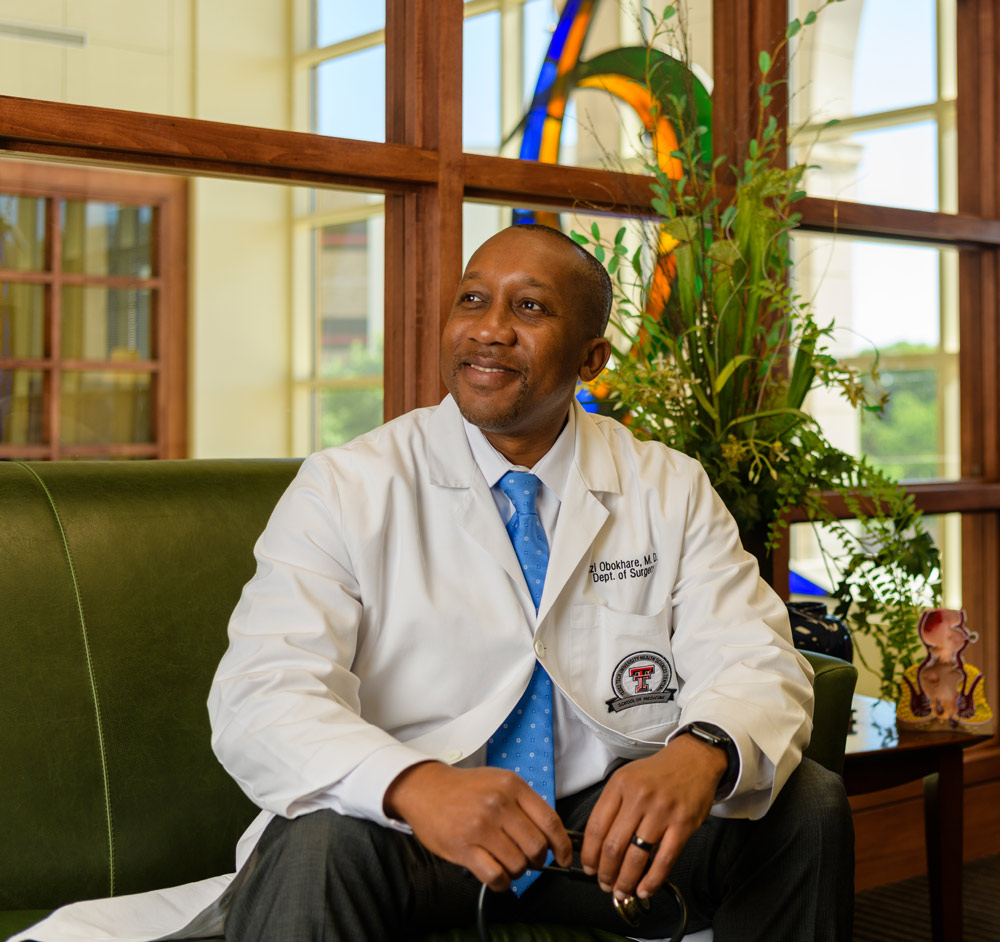
zi Obokhare’s, MD, FACS, FICS, view of cancer prevention is not theoretical. It is grounded in what patients will actually do.
“The best test is the one that gets done,” he says. That practical mindset shaped outreach and research efforts for a colorectal cancer screening program he oversaw for nearly a decade at Amarillo, Texas.
Over the years, one of the most significant platforms for that work was a colorectal cancer prevention program funded by the Cancer Prevention and Research Institute of Texas that served Amarillo and the surrounding region. The team also studied barriers to screening, including fear, stigma, distrust and the perception that testing would be unpleasant.
Patients with colorectal cancer were identified through the program and might otherwise have gone undiagnosed until much later.
Ways to improve participation, such as reminders that increased return rates for stool-based tests were also examined by program staff.
Obokhare says the program produced more than 10 peer-reviewed publications and asked a central question: How do you make prevention more reachable for real people?
“The greatest challenge is education,” Obokhare says. He has seen patients ignore changes in bowel habits or blood in their stool. He has seen families with a history of colorectal cancer who were never clearly told that screening was needed sooner. He has seen younger people arrive with advanced disease after ignoring warning signs.
For him, the answer is not fear but clarity. Cancer, he says, should not be treated as a taboo subject. Families should be able to talk about it openly. Communities should hear about prevention in language that feels comfortable. Patients should know that getting screened is not just about finding cancer. In many cases, it is about preventing it altogether.
Obokhare is also quick to say he did not do the work alone. He credited institutional support from TTUHSC leaders in Amarillo, including School of Medicine Regional Dean Brian Weis, MD, PhD; former Regional Dean Richard Jordan, MD; and department chair M. Harris Nazem, MD.
He is also grateful for team members and partners who helped carry the program forward, including coordinator Christine Andrews, research coordinator Deborah Trammell, community health workers, physicians, nurses, home health partners and others across the region.
Success, he says, would mean getting everyone of age screened and helping those at high risk understand the urgency of acting early.
It would mean fewer patients showing up with Stage 4 disease. It would mean a region that knows prevention is possible and worth pursuing.
In rural Texas, where time, distance and resources can all stand between a patient and care, that kind of success does not happen by accident.
It takes physicians willing to keep showing up, teams willing to go into communities and partners willing to invest in long-term prevention. For years, that is what Obokhare and his CPRIT-supported team built in Amarillo: not just a screening program, but a pathway to earlier detection, better understanding and, for many patients, a different outcome.
Because when the message reaches a family, a barrier is removed, a test gets done, hope begins earlier.

Excerpts from the curriculum vitae of
Education:
Present Positions:
- General surgery program director, TTUHSC Amarillo School of Medicine
- Professor of general and colorectal surgery, TTUHSC Amarillo School of Medicine
Publications, Author Credits, Speaking Events (As of April 2026):
- 42 research articles in peer-reviewed publications
- 4 book chapters
- 7 journal reviewer opportunities
- 47 speaking events