

 Feature
Opportunity to Influence
n 1985, Rhonda Collins was living with her husband and two small children in a small house in Texarkana, Texas. Her husband, a mechanic, worked two jobs to make ends meet. Collins was restless for something more and dreamed of going to nursing school — but it was out of the question: “We were broke.”
A chance conversation at a choir practice would change all of that.
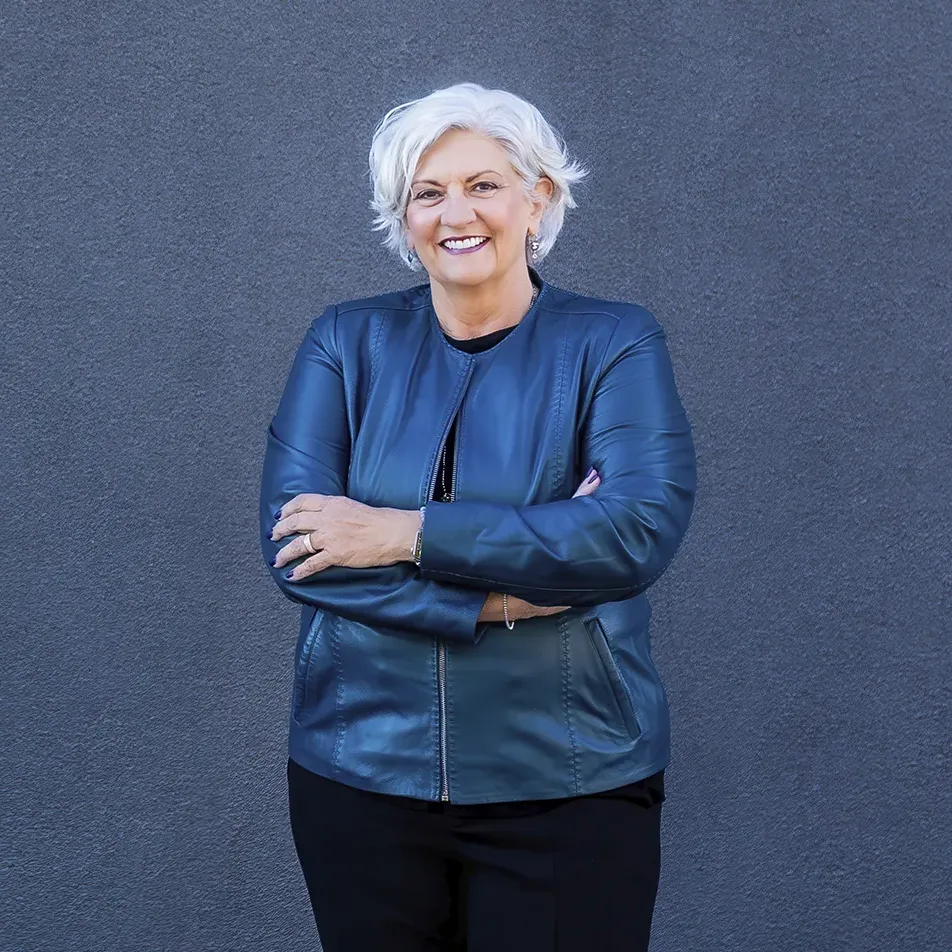
Today, Collins, DNP, RN, (Nursing ’18, ’97) is a globally respected nursing leader, with nearly three decades of experience: staff nurse, hospital vice president, executive at four medical technology companies. She has published journal articles and spoken at nursing conferences worldwide. She is also co-founder of the award-winning American Nurse Project, which amplifies the voices of nurses nationwide.
In many ways, Collins is simply paying forward a gift — one she received when her family was living paycheck to paycheck in Texarkana. She had been chatting one night with a fellow choir member, Trudy O’Gorman, when O’Gorman asked her what she did for a living. “I told her, ‘Well, I want to go to nursing school, but that’s just not happening,’” Collins says. It turns out O’Gorman’s husband was a local urologist who sponsored students pursuing health professions. He had never met Collins, but he decided to invest in her future: He paid for her tuition, her textbooks, her uniforms, even the required shoes.
“The only thing he wanted in return,” says Collins, “was for me to be the best nurse I could be.”
The idea for the American Nurse Project came when Collins was vice president at the health care company Fresenius Kabi USA. The company was launching an IV infusion pump that nurses would use; Collins had a marketing budget for the rollout, but instead of spending it on branded stress balls or coffee mugs for the nurses, she wanted the company’s name to be associated with something bigger and longer lasting. She co-founded and funded The American Nurse Project, a book and series of documentaries aimed at raising awareness of the work that nurses do. “However invisible they may seem to be,” Collins wrote in the book’s afterword, “nurses are an enormous force.”
More recently, Collins served as chief nursing officer at the medical diagnostics company Cytovale , helping to implement a rapid blood test — called IntelliSep — that simplifies screening for sepsis.
In October of 2025, she announced her retirement — but retirement, for Collins, just means more time to write, speak and consult. She has written blog posts and scholarly articles on topics including technology adoption among nurses, the role of artificial intelligence in nursing, and the stress of working in a congested, high-impact environment.
“When I die, I don’t want my tombstone to say, ‘She really knew how to run Pitocin’ [a drug to use to induce labor]. I want to be known for leaving my profession better than I found it — for making a contribution that elevated this profession.”